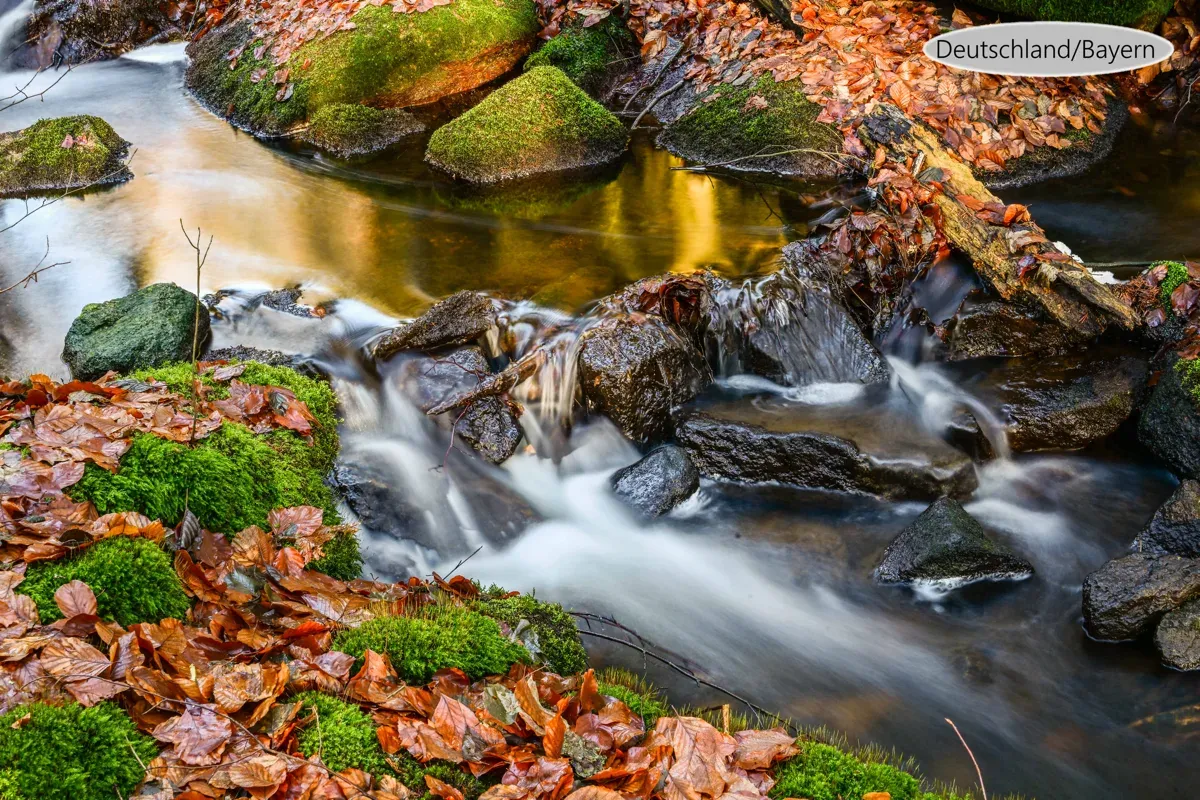
The Steinwald Nature Park, with its 230 square kilometers, is not exactly the largest in Bavaria, but it is incredibly rich in structure and biodiversity, something that others can only dream of. I have been coming here as often as possible with my camera for years, always looking for new places to discover. It is not the big paths, but the small paths that I find most appealing. Depending on the season, the Steinwald always shows a different face. Especially in the spring, with its delicate green beech leaves and the newly growing fern patches on the riverbanks, accompanied by the loud chirping of the songbirds, always fascinates me. After the snow melts and after heavy rain, the small Strudelbach near Friedenfels, the first nature experience village in Bavaria, where I am walking, often becomes a rushing wild stream. In contrast, autumn presents itself with an explosion of color, especially when the colors shine on the surface of the water in the streams and ponds.
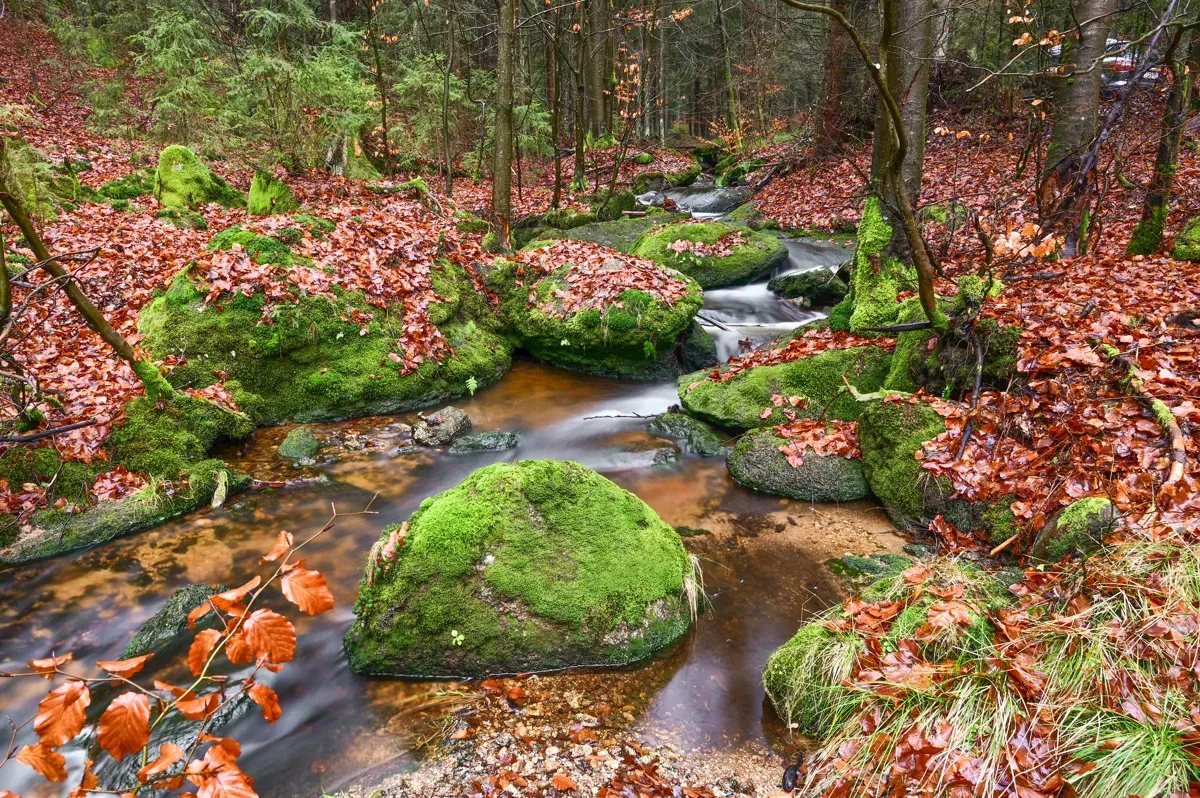
In winter, it can often be a bit tiring to walk through knee-high snow, but it often reveals magnificent ice sculptures on the banks and in the crystal-clear streams.
Two special places that I always like to visit are one, a large beech tree that fell down several years ago, which is rotting and its dead wood trunk provides an ideal substrate for the most beautiful slime molds (Myxogastria). These millimeter-sized, extremely colorful and form-rich organisms are often hidden from the untrained eye.
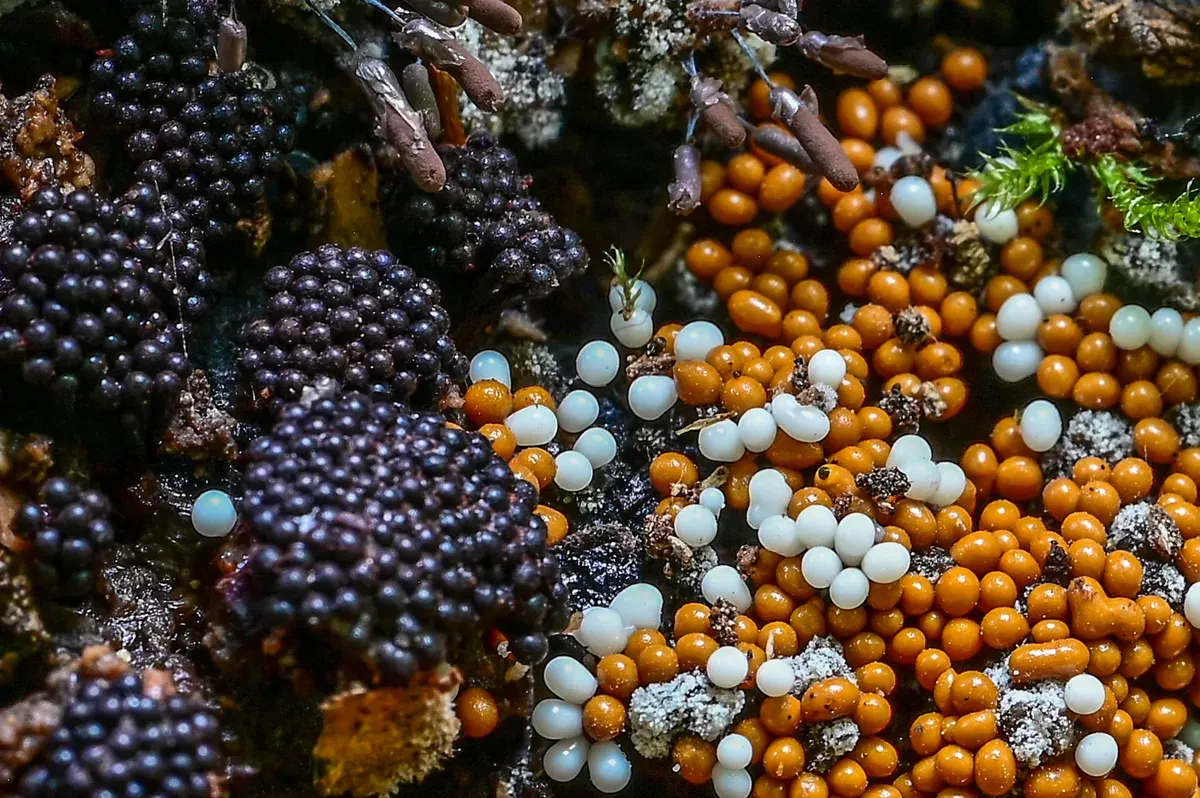
A dirty pair of trousers is no problem if you crawl on all fours. Not far from this spot is also the stump of another dead beech tree, which is also in the final stage of wood decay. Here, I have also been able to observe the decay for years, as fungi decompose the tree and the exotic mushroom, the Hericium coralloides, continues to spread. It is relatively rare and there are only a few places in the Steinwald where I have been able to observe it. It grows in several places on the trunk and branches out into ever finer branches. This "coral" is the fruiting body of the mushroom, while the mycelium spreads in the wood and continues to decompose it. This, in its juvenile stage, blindingly white mushroom, which could be mistaken for a South Sea coral, attracts me regularly in autumn, but unfortunately, when the wood has completely decomposed, it will disappear again in the near future - in the hope that it will continue to spread its spores.
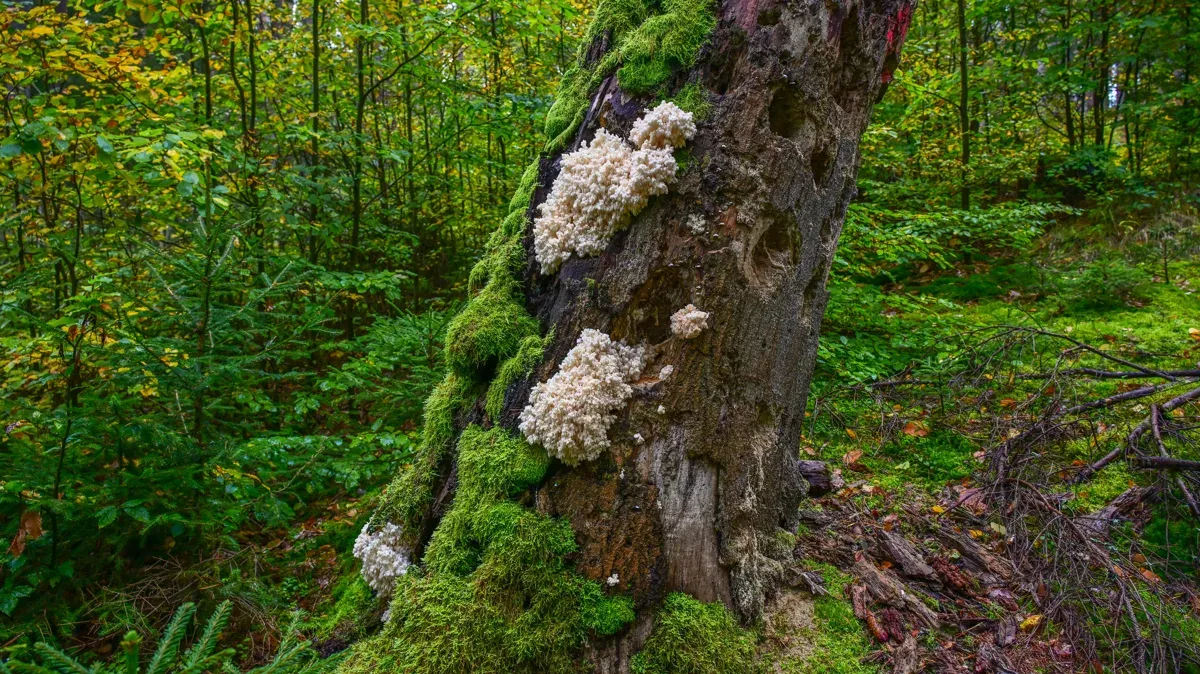
Of course, other tree fungi also grow on dead tree trunks, which mean both death and new life.
Now I continue along the Strudelbach to my second favorite place. Along the way, small streams that flow down from the hillside always flow into the stream, where my attention is focused on the mossy area. Here, a few years ago, I discovered a small, white-flowered flower. A well-known botanist was very enthusiastic about this "treasure" and I had to take him there the next day. It turned out to be the Kleinblütiges Moosauge (Moneses uniflora), a rare forest plant from the Heidekrautgewächse family.
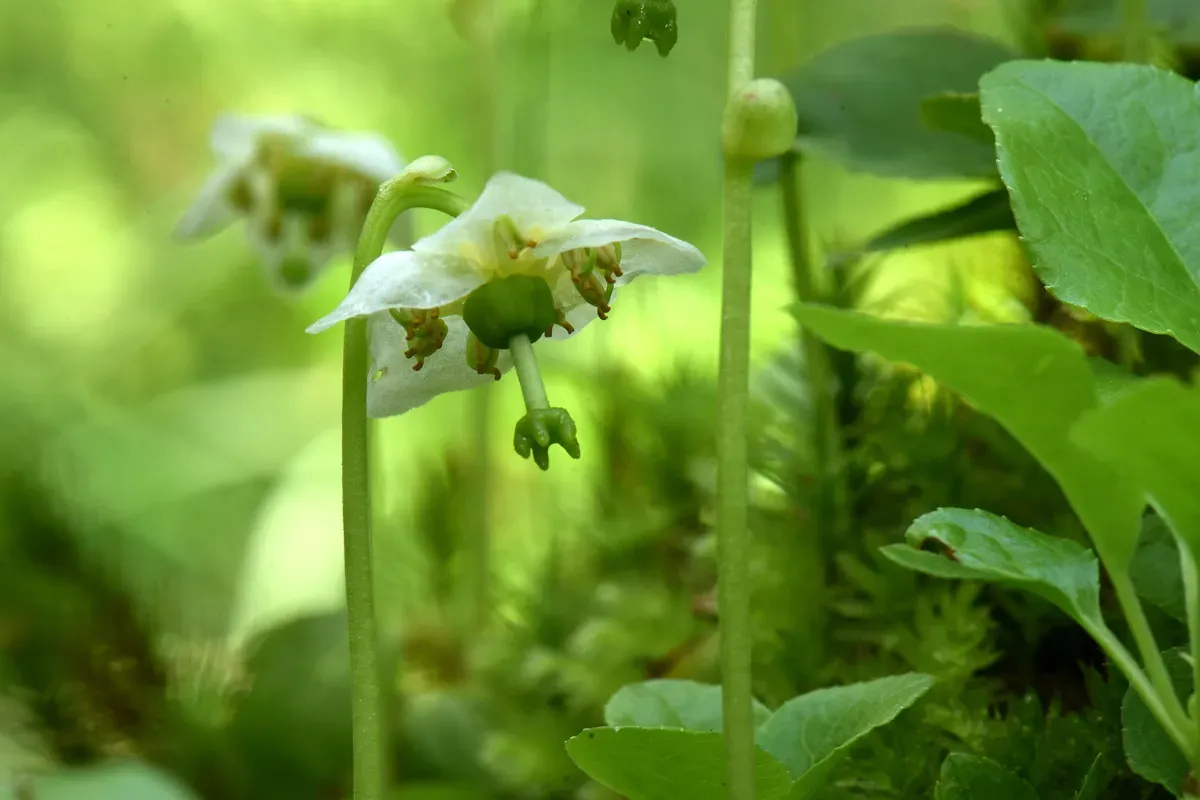
Unfortunately, I could not find it later, but I will regularly observe the location. I continue along the meandering stream and, to my delight, I always find edible mushrooms in the late summer and autumn, such as the Marone, Edelreizker or Chanterelles, but also dangerous and beautiful mushrooms, such as the unheimlicher Knollenblätterpilz and the herrlicher Fliegenpilz.
After half an hour, I finally reach my second goal, a small rocky slope where the Strudelbach divides into many small waterfalls between the rocks. The delicate and milky-white waterfalls are particularly beautiful, with a long-exposure camera. A special sight is in the spring, when the water flows over the granite blocks through the ferns and other plants.
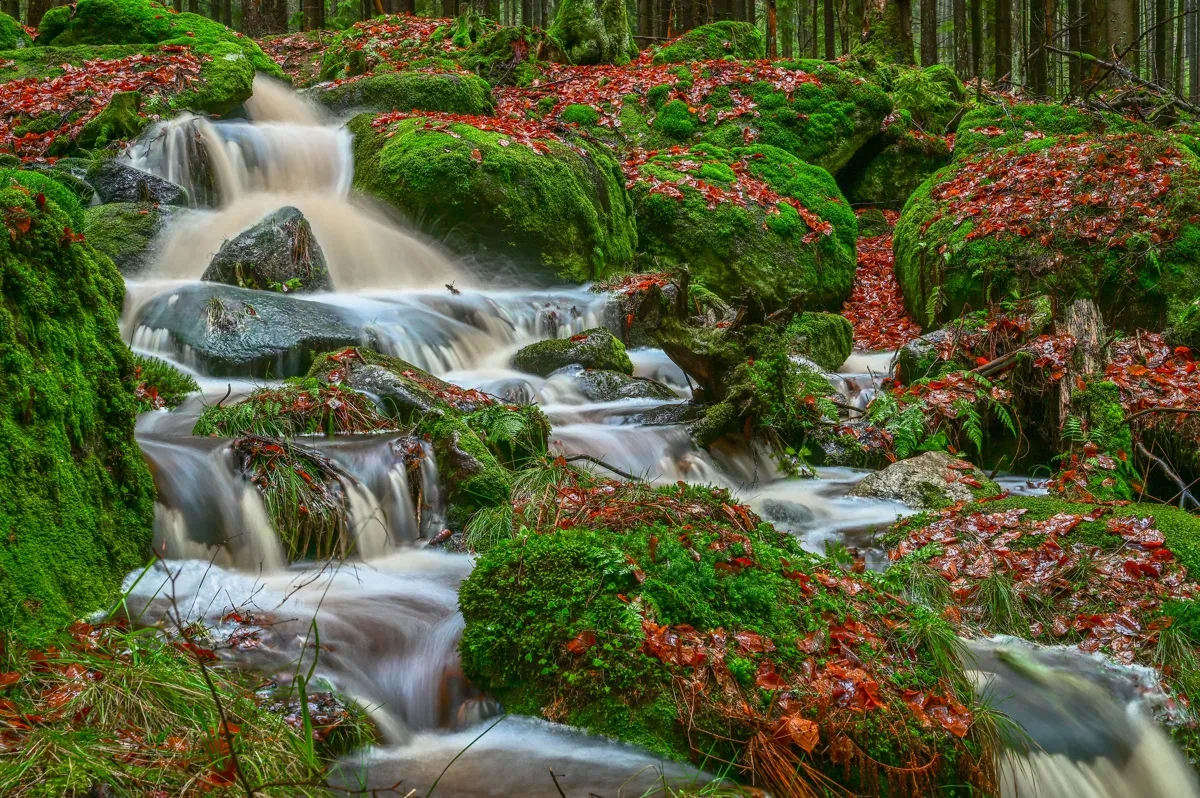
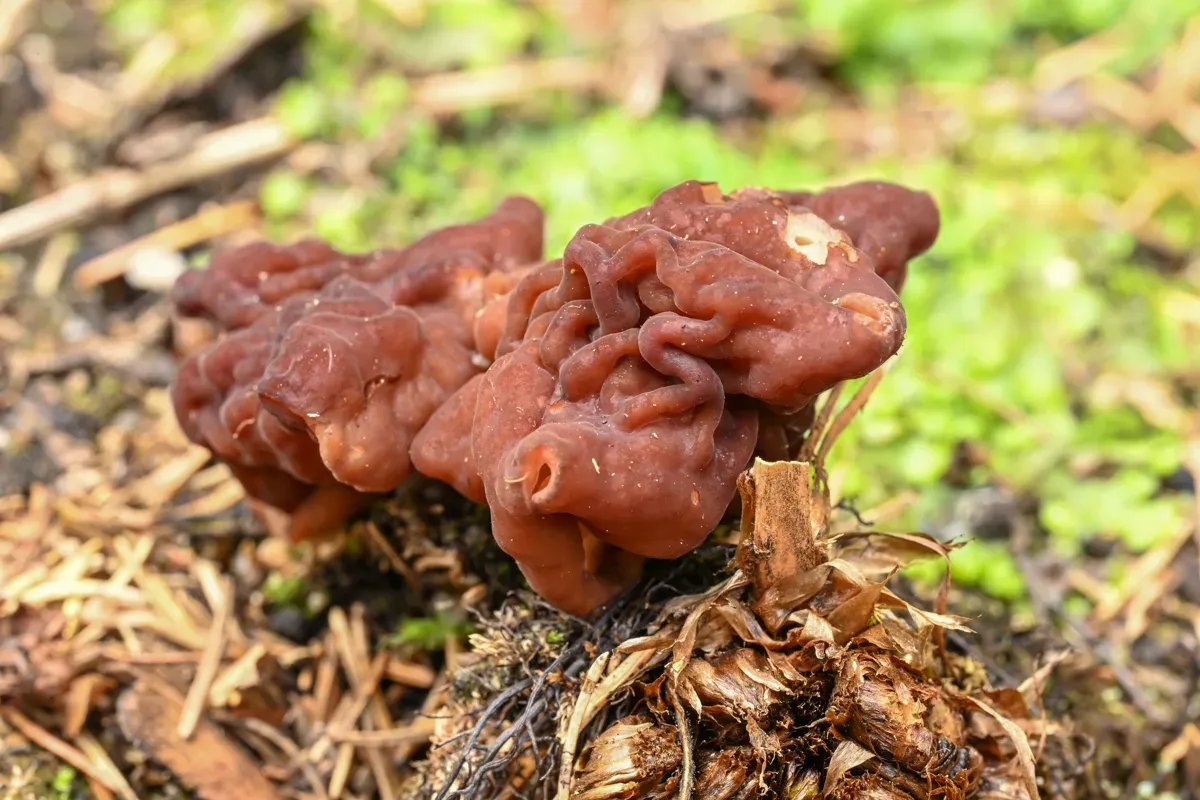
I always linger here and listen to the sound of the water, especially in the spring, to the chirping of the birds. As a passionate amateur photographer, I still take many pictures, although I already have a large collection of pictures of the Strudelbach, but one always hopes for the even better picture. On the way back, I make a completely special discovery for myself. Between two rocks, something brownish-glittering emerges, which, upon closer inspection, turns out to be the Frühlingslorchel (Pilz). Of course, I have to take several pictures, as this mushroom is not found so often.
Anyone who walks through the small Steinwald Nature Park with open eyes will be rewarded with a rich natural treasure. Accompanied by exotic-looking insects, such as the long-necked Camelhalsfliege or the Blasenkopffliege Myopa buccata, and a well-camouflaged grass frog under beech trees or in the air of the Schwarzspecht, which announces its flight with a loud call, I have made many hikes and walks in the second smallest nature park in Bavaria, the Steinwald, and I hope there will be many more.