I drove off in the afternoon of the first day with my small rental car in Tbilisi. For the journey to the 154 kilometers north of the market town of St. Stefan (Stepanzminda) at the foot of the Kazbeg, I needed about three hours.
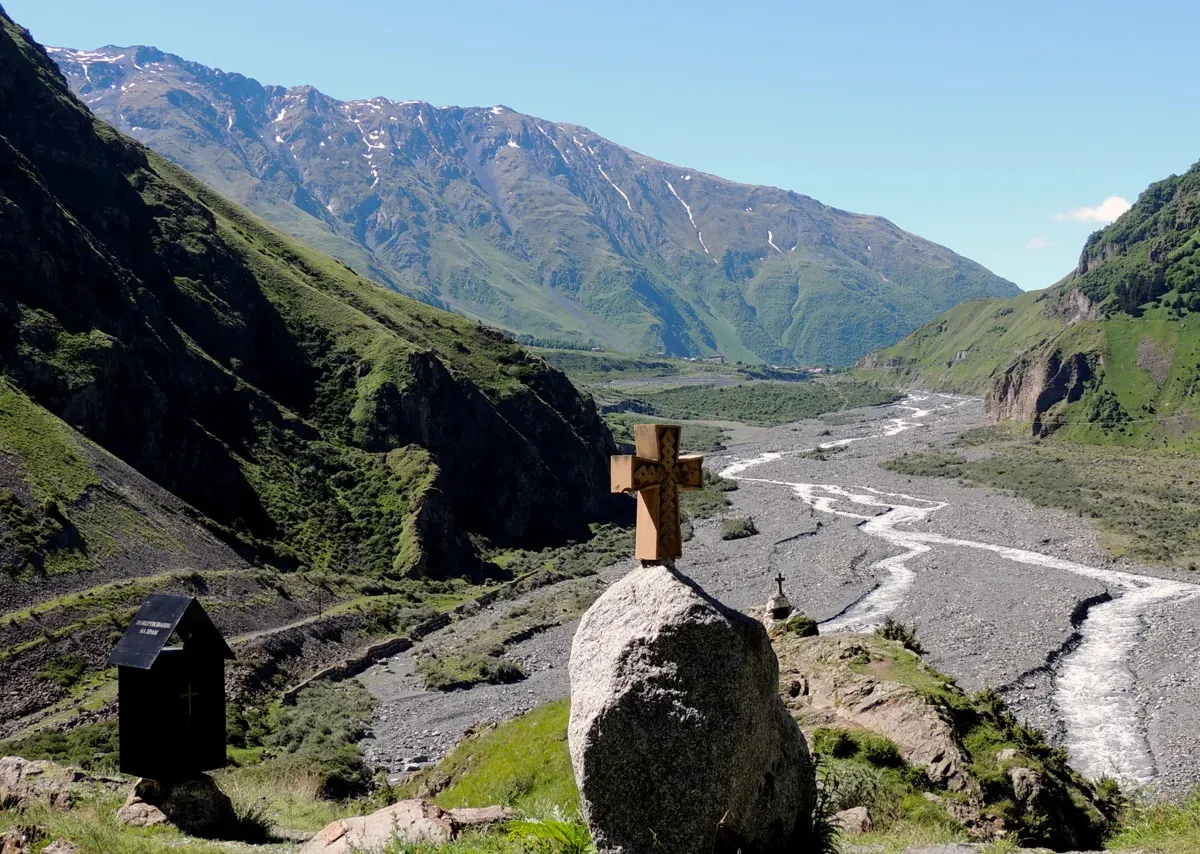
The National Road S 3 is identical to the historic "Georgian Army Road". The old trade route was mentioned in Greek writings as early as 100 BC as a caravan route, protected by legions in the Roman era, and later further developed. Some watchtowers still bear witness to the importance of the road.
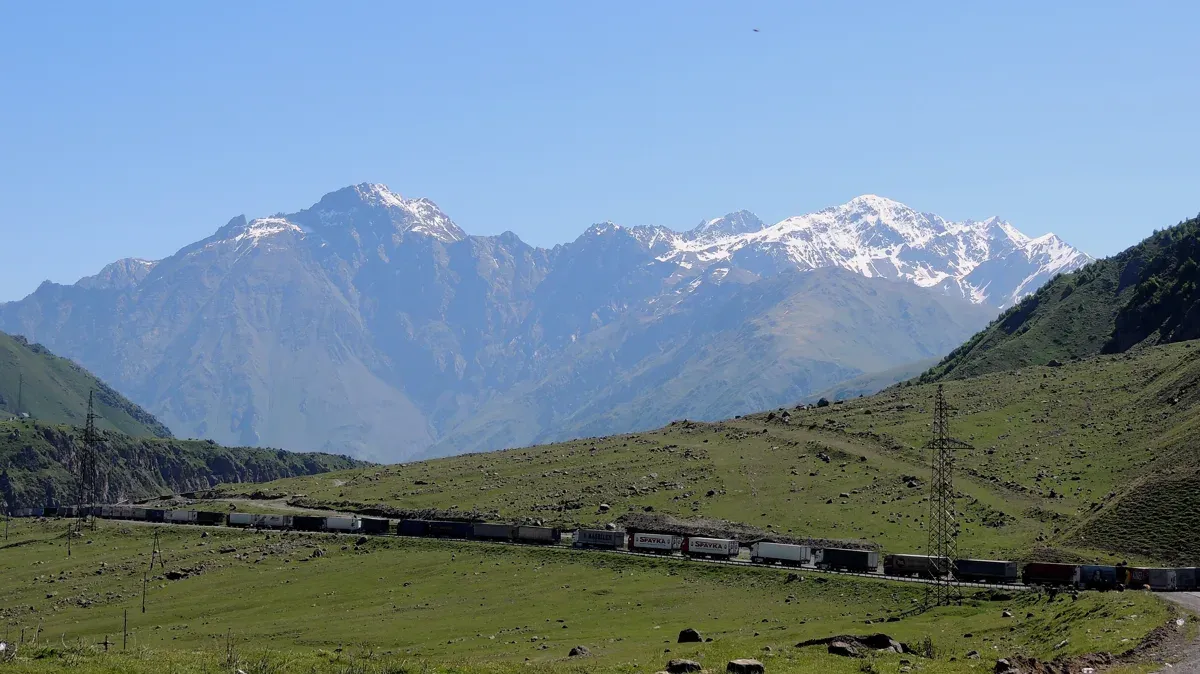
I passed the winter resort of Gudauri with its five chairlifts and 19 kilometers of downhill slopes. Shortly afterwards, the Jvari Pass is reached at an altitude of 2395 meters. Behind it, a line of freight wagons stretches along the roadside. There is a border crossing in front of the Russian border to protect the holiday resorts north of the Jvari Pass. The landscape becomes increasingly impressive, with deep green slopes, flowering mountain pastures, rocks and snow-capped mountains.
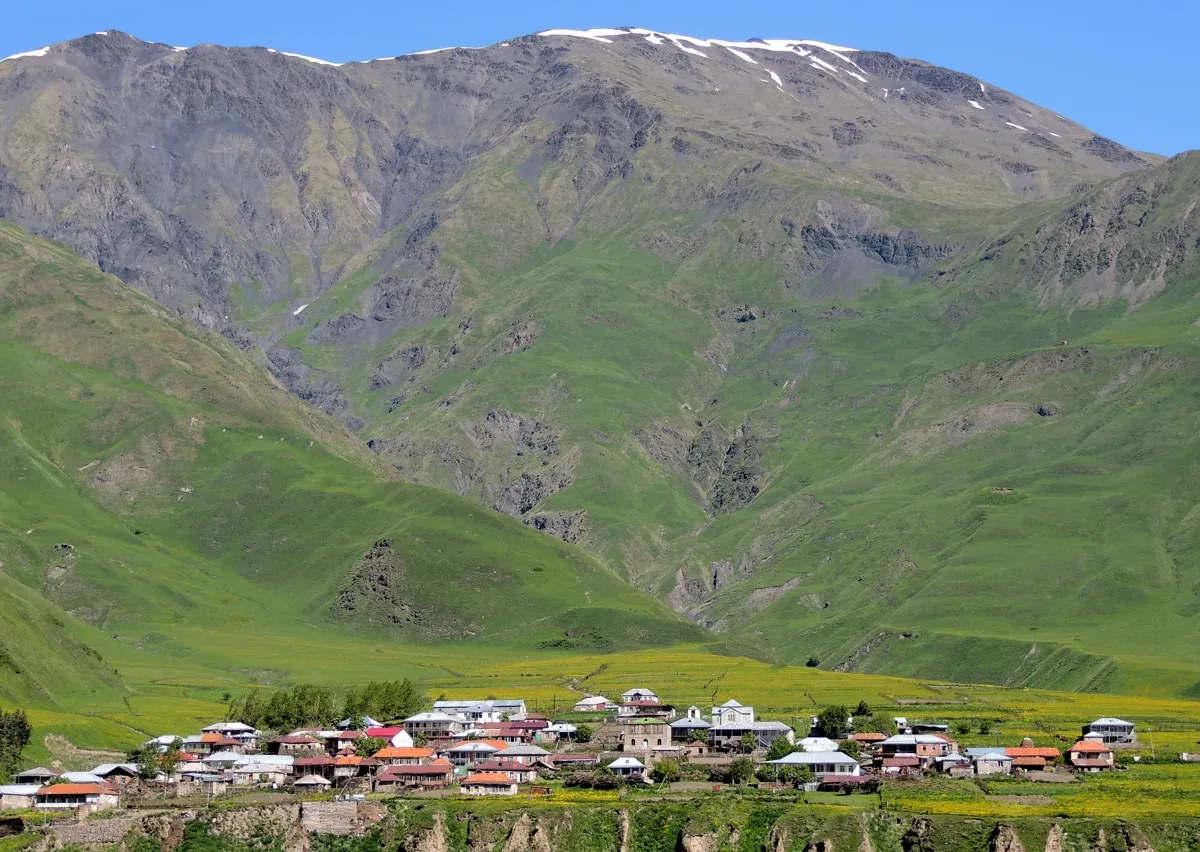
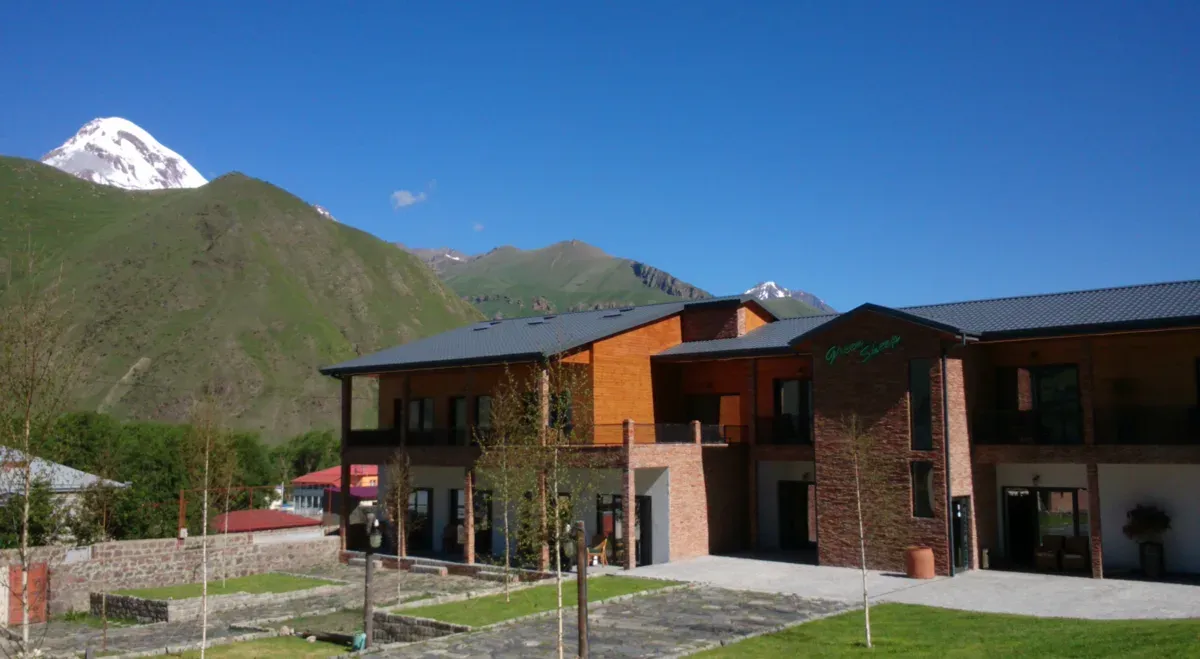
Shortly before sunset, I arrived in St. Stefan. Right at the entrance to the town, away from the National Road S 3, is the beautiful "Hotel zum grünen Schaf" built in the style of a mountain lodge entirely of red bricks and wood. There is a restaurant with two floors. It is still open – yes, it is even very busy, a 17-person travel group from Germany is sitting at three tables in the lower area. I take a seat on the gallery and order a delicious chicken soup and a meat and vegetable stew with fresh herbs for dinner. A group of young locals has also now gathered on the gallery and is singing and playing music beautifully. The polyphonic Georgian singing was included in the first UNESCO list of "Masterpieces of the Oral and Intangible Heritage of Mankind" in 2001. I would gladly quote the Russian composer Igor Strawinsky: "What the Georgians sing is more important than all the new discoveries of modern music. It is unparalleled and simple. I have never heard anything better!"
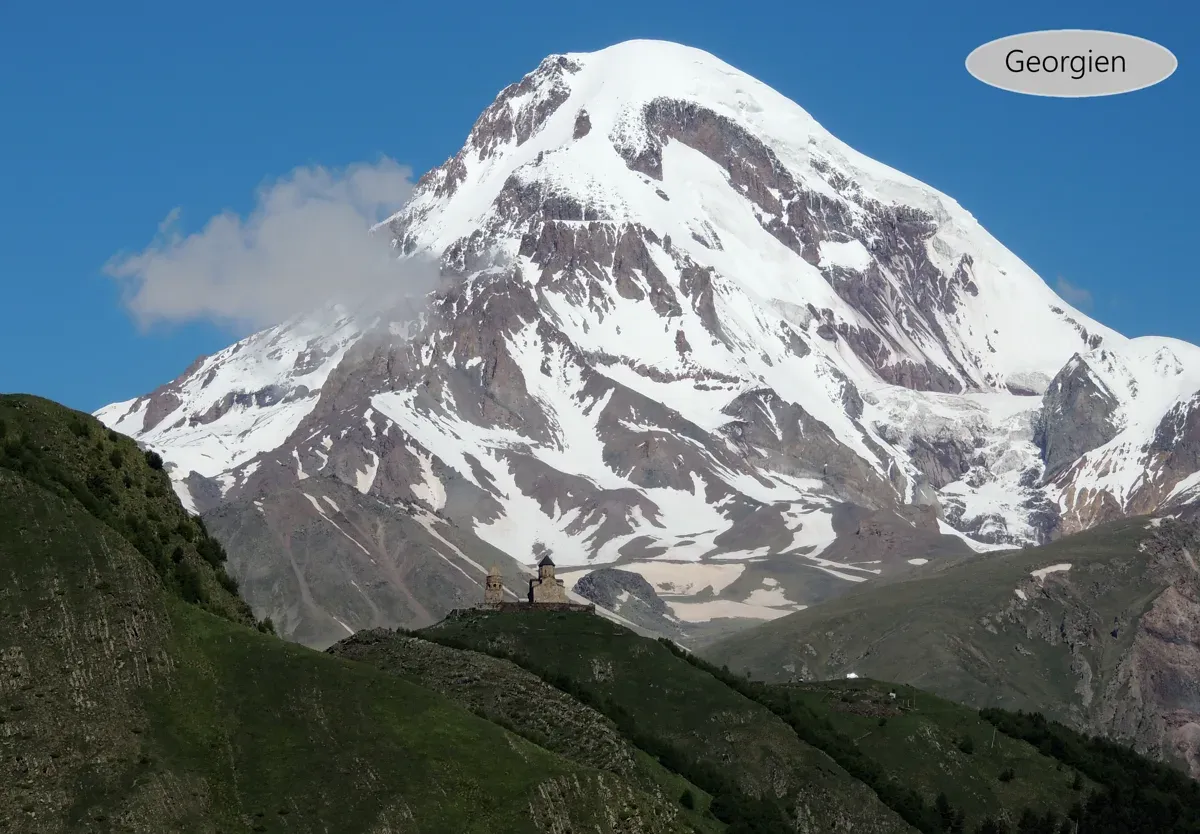
Day 2: Perfect weather in the Caucasus! On the way to the restaurant, the Kazbeg is already visible from the first green hill. A blinding white snow and ice cover the 5,047-meter-high mountain. According to legend, Zeus, the father of the gods, forged the Kazbeg for Prometheus.
After a rich breakfast with wheat porridge, Wiener Würstchen, egg, bread, cheese and yogurt, I set off on the road that runs past the hotel, slightly uphill, to enjoy the famous view of the opposite ice giant with the Church of the Assumption on a green hill.
Then I changed to the other side of the valley and turned from the village of Gergeti uphill in the direction of the church. Some tourists take the ascent on foot, others are driven uphill in an all-wheel vehicle. I am satisfied with the view from below of the church and down into the St. Stefan valley.
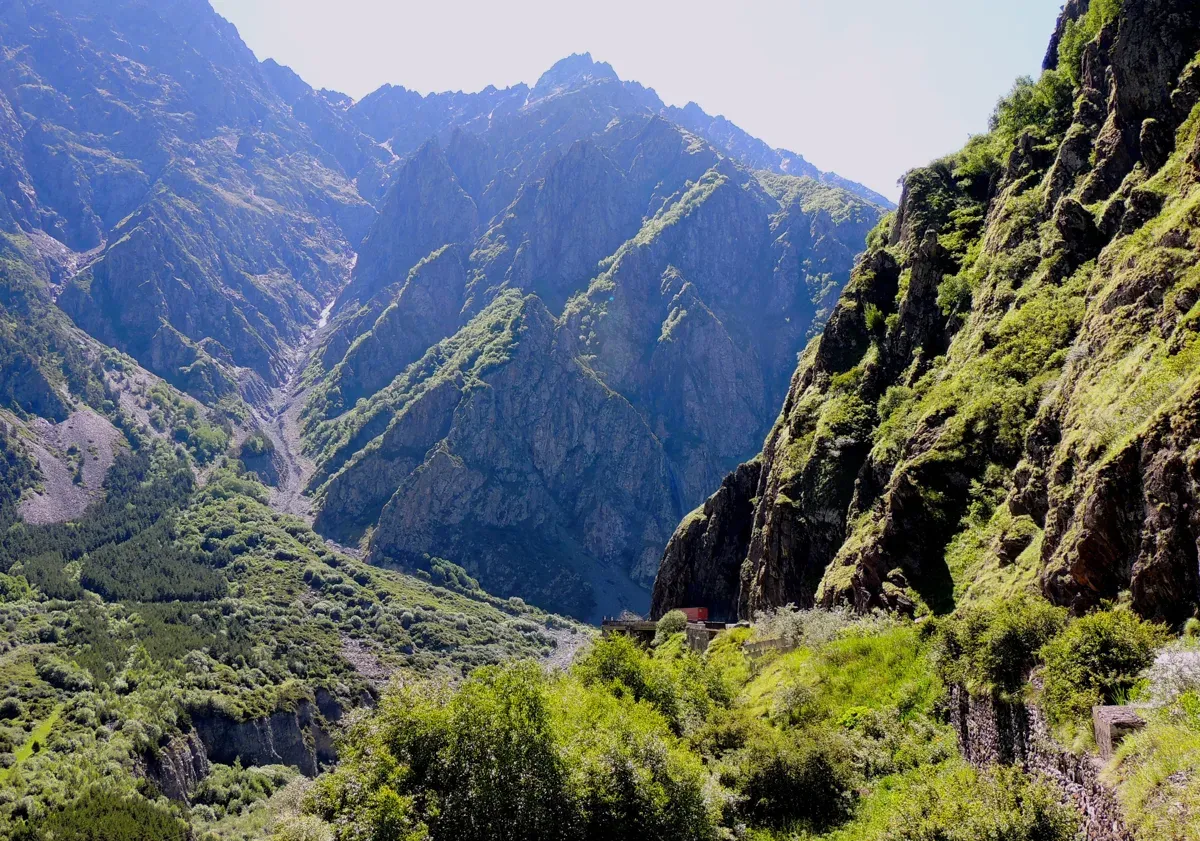
The last, 12-kilometer section of the Georgian Army Road led me along the Terek through the imposing Darial Gorge to the large, newly built Darial Monastery shortly before the Russian-Ossetian border. Afterwards, it is time for a break on my balcony with a view of the wonderful mountain world.
In the evening, I try another Georgian specialty in the restaurant – Khachapuri, a baked cheese bread. The hearty dish goes perfectly with a red wine from Kakheti. Georgia has a 6000-year-old wine tradition, and it is even said that the words wine, vino, vin and wine all originate from the Georgian word "ღვინო / Ghvino".
Day 3: On the way back, I buy a large glass of mountain honey from one of the many stalls along the road. Shortly, the road branches off to the left into the Sno Valley – as the name suggests. I stay on National Road 3 and reach the Ananuri fortress with the "Maria Himmelfahrt" church (Mary of Assumption) from 1689 behind the Jvari Pass. The view from the castle wall over the lake is very beautiful.
Those who do not want to rent a car can also use one of the numerous express buses from/to Tbilisi.