With a little luck, you can still come across a bird in farmland today that was once an absolutely common sight: the grey partridge. If you want to spot one, you should know where it likes to spend its time and how to track it down despite its perfect camouflage.
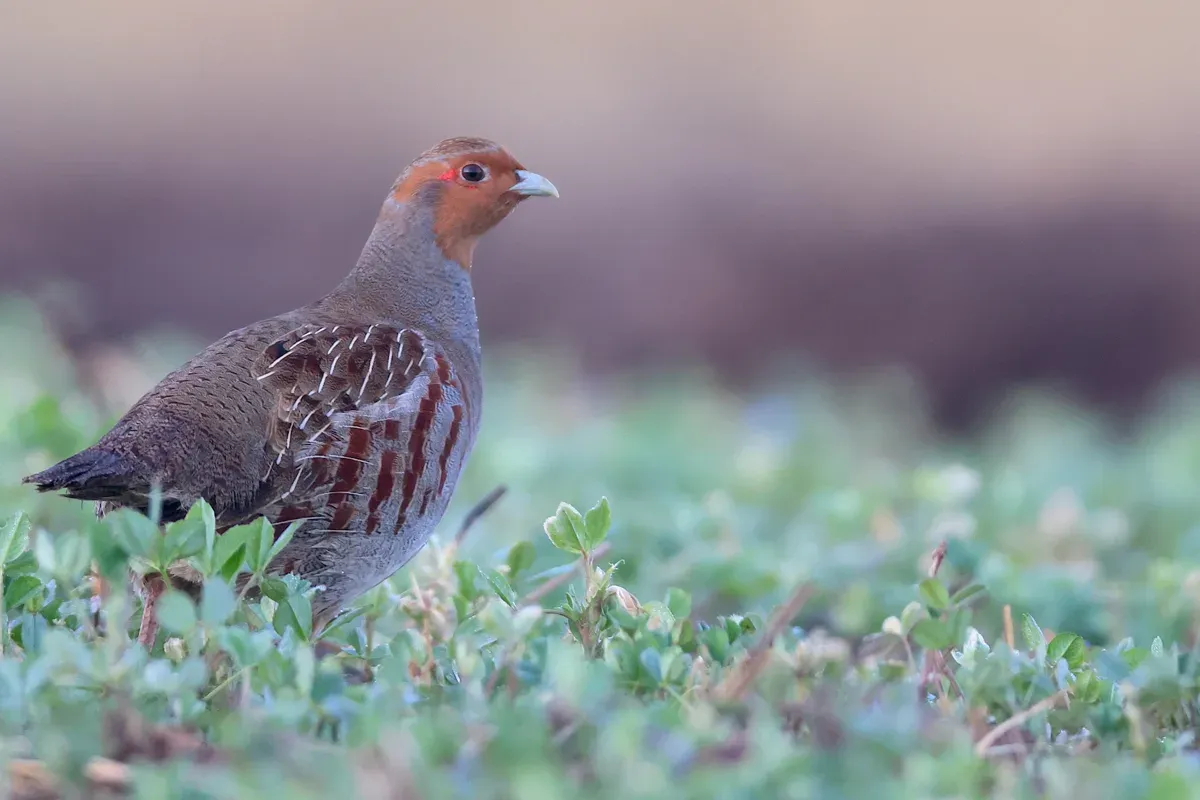
Perfect camouflage
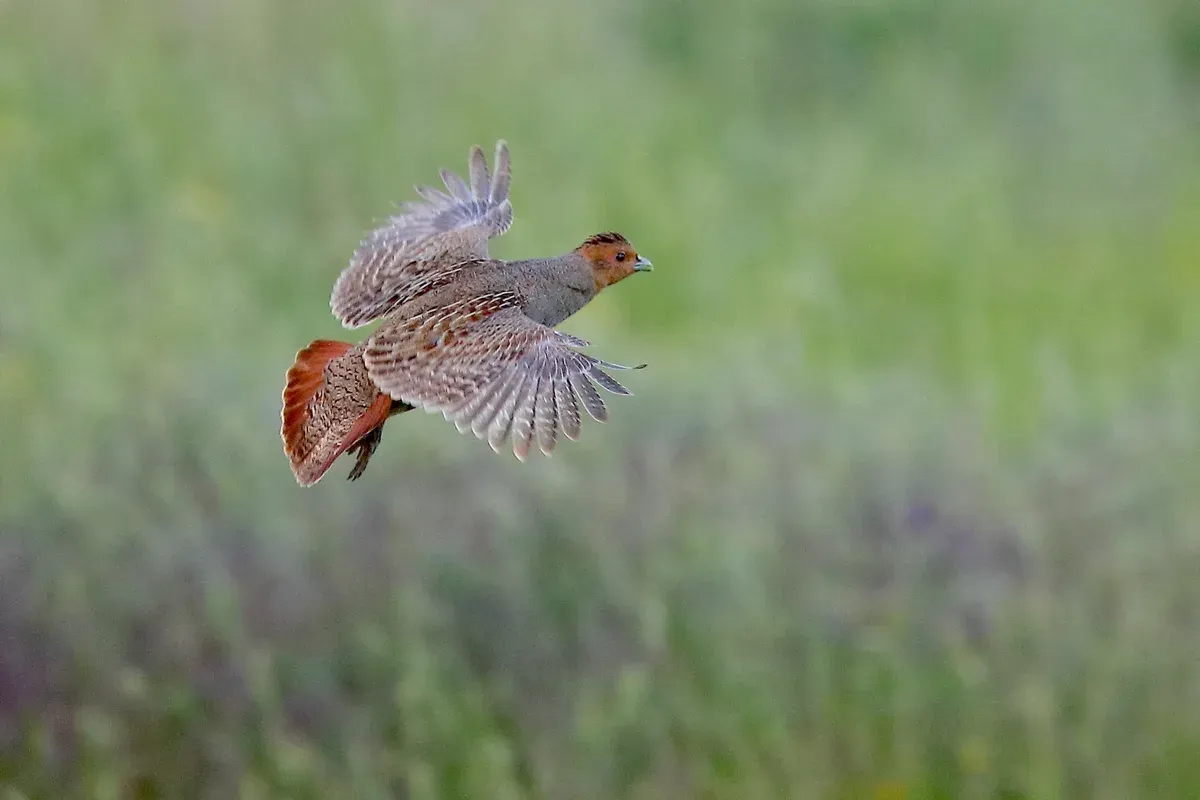
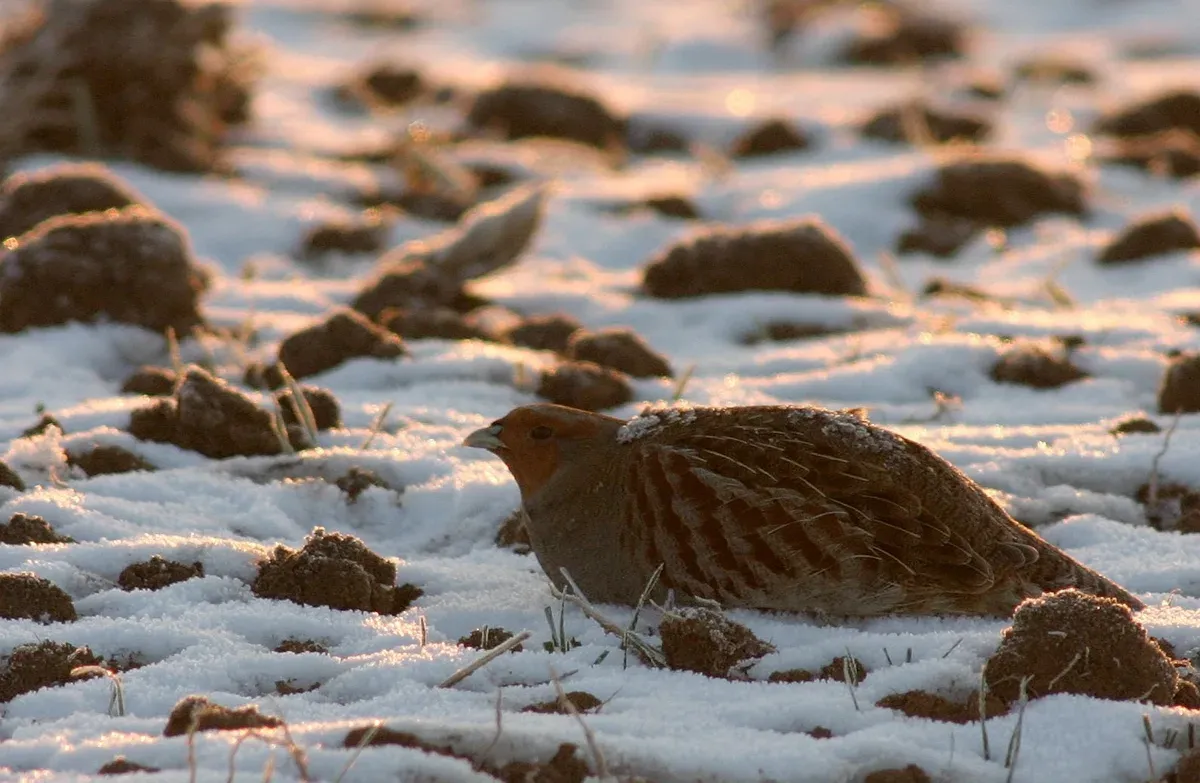
Visually, it is rather difficult to find this superbly camouflaged gamebird, which is about the size of a pigeon and, when in danger, prefers to hide on the ground rather than fly away. Sometimes you almost "stumble" upon partridges by chance while walking through the fields, and they suddenly burst into flight as if from nowhere. When a grey partridge takes off, it does so in a flash and with a conspicuous whirr of wings. After just 100 to 200 metres the low flight is over and ends somewhere in a safe hiding place, in a dense fallow strip, say, or at the edge of a low hedge, and you have lost sight of the birds again.
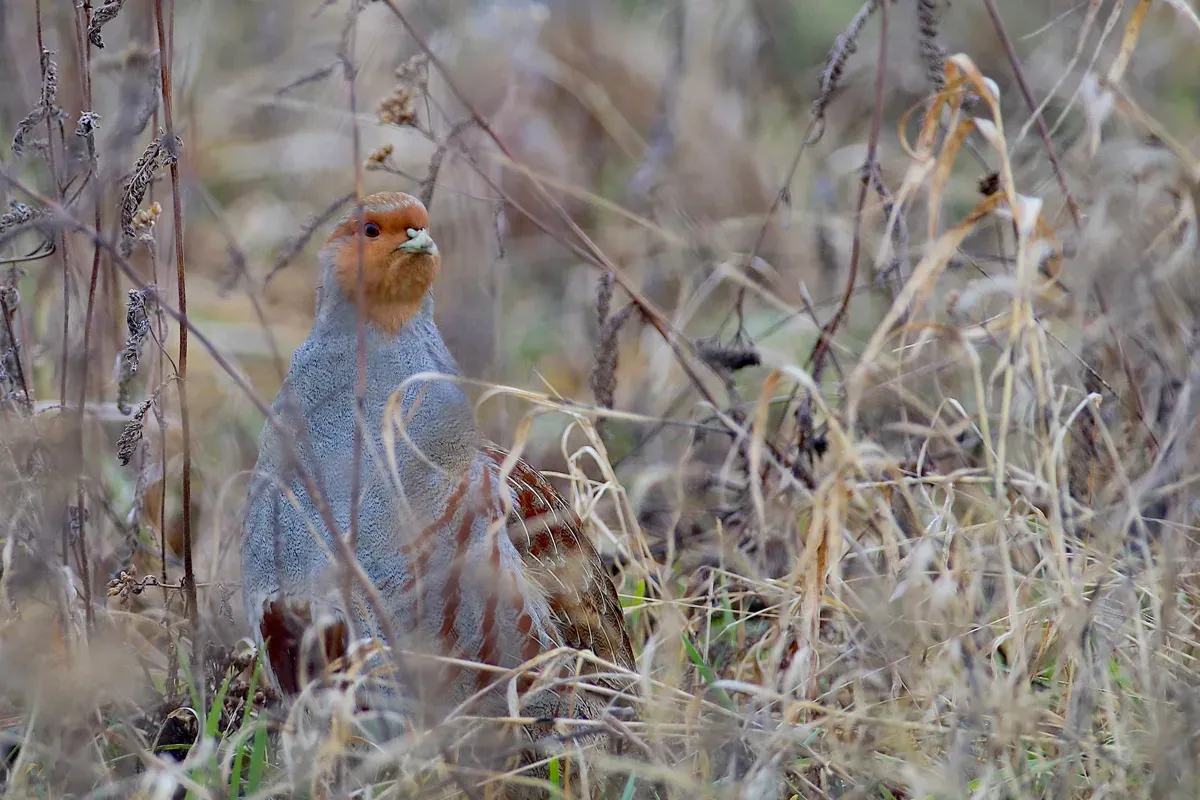
Their calls give away these secretive birds
The best time to meet this rare gamebird is at dawn in the early morning - about half an hour before sunrise - or in the late evening - about half an hour after sunset. At these times the partridges, which otherwise prefer not to draw attention to themselves, are most likely to betray their presence with their rasping call. These sounds can be heard again and again throughout the year, but the birds are especially active at the end of winter and the start of spring. That is the courtship season, when the pairs come together. Dozens of birds may briefly gather, calling and running about in a whirl, until a short time later the partners have found each other and the pairs spread out across the area again.
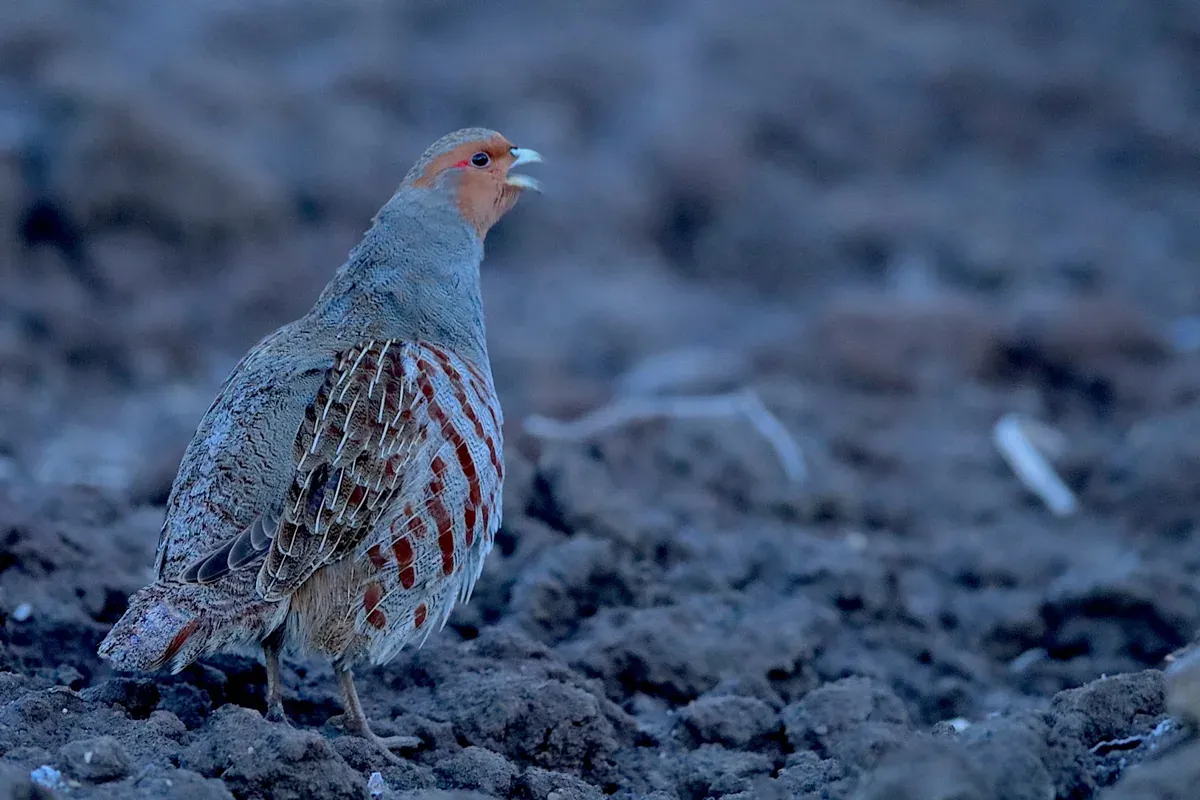
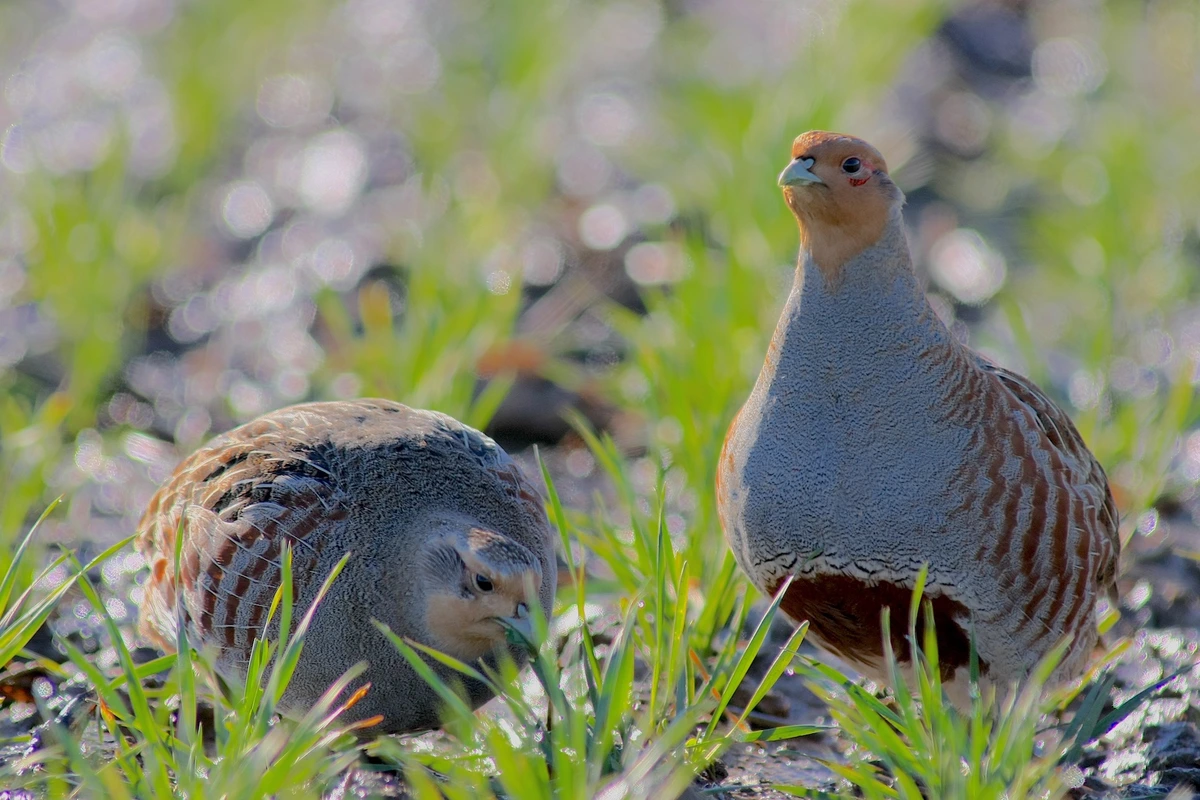
Late summer and autumn are also good times to meet these otherwise secretive farmland birds, because large family groups are on the move. As they run one behind the other like beads on a string, these groups are known as coveys (in German, "chains"). The closely bonded family members stay together throughout autumn and winter and keep in regular contact by calling. If you know these sounds, you have the best chance of spotting them in the fields.
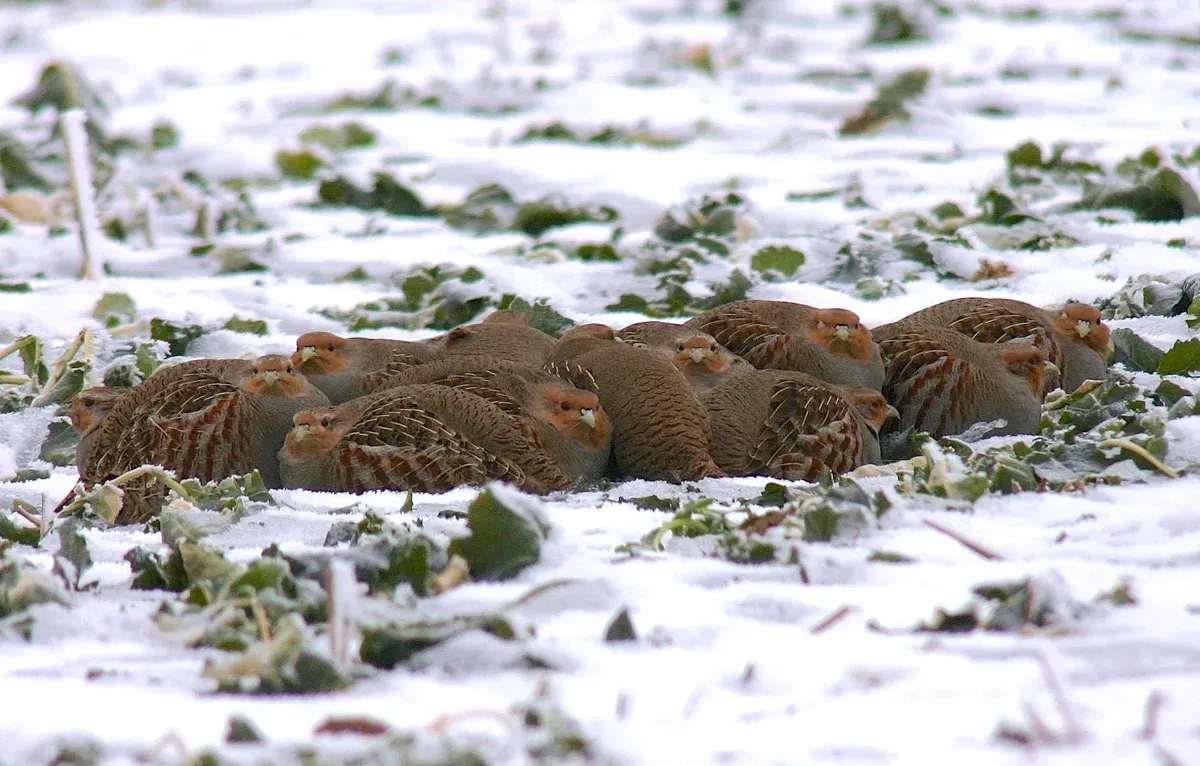
A sedentary follower of human cultivation
Encounters like these, which were certainly commonplace in the past, have become ever rarer over recent decades. This has to do with the grey partridge's habitat and way of life: hardly any other native bird species is so closely tied to human agriculture. It lives in fields and farmland all year round and is virtually a pure follower of human cultivation. Completely natural habitats such as the steppes of Central Asia, from which it reached Central Europe long ago, are inhabited by the grey partridge in Germany at best only in isolated spots, for example a few small remnant populations in moorland. The grey partridge is also strictly sedentary: as a rule it stays close to where it was born and does not migrate south in winter. This means that, in the end, it is highly dependent on human activity - and that applies throughout the year. This fateful relationship has been evident in recent decades: the grey partridge population has been declining continuously since about the end of the 1960s. In the last 25 years alone, the population in Germany has shrunk by more than 90 percent. Today, only remnants of the once-common large populations flit across the fields.
Grey partridges can be saved
It is thanks to the efforts of many volunteers from hunting and nature conservation, and above all many dedicated farmers, that the grey partridge has been saved in some areas. Multi-year flowering fallow strips, unsprayed field edges, plentiful grass margins along well-kept low hedges, or cereal fields with wider spacing between the seed rows can help this farmland bird enormously - and, with it, an entire community of species.
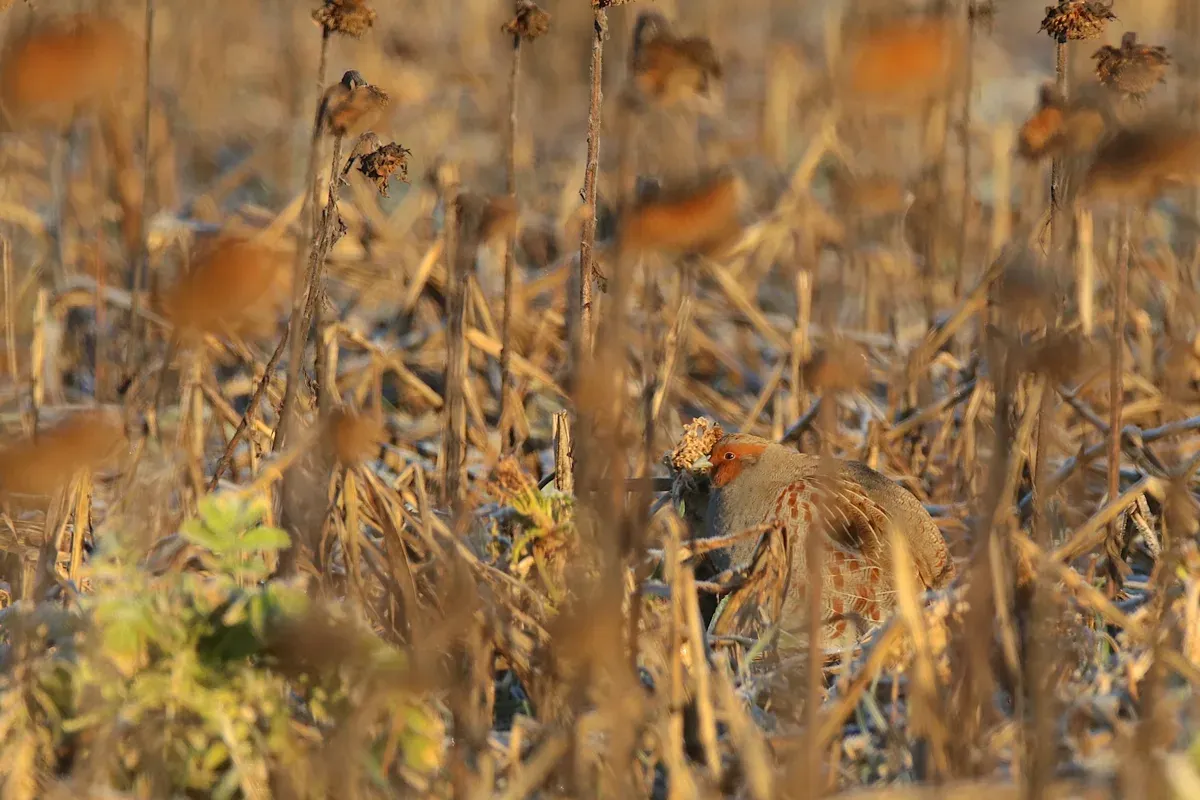
Other birds such as the corn bunting, the yellowhammer, the skylark and the quail benefit from these measures just as much as countless insects that make use of the rich supply of flowers. As soon as more structural and flowering diversity returns to the fields, these species find shelter and food again - ideal conditions for offspring and thriving populations. Some of these species can multiply very quickly and take immediate advantage of favourable conditions. The grey partridge is an example of such a strategy: a clutch can contain up to 20 eggs. If the season is good, there is enough food for the small chicks, and the family gets through the year well protected without being eaten by predators, then the population has - purely arithmetically - almost increased tenfold.
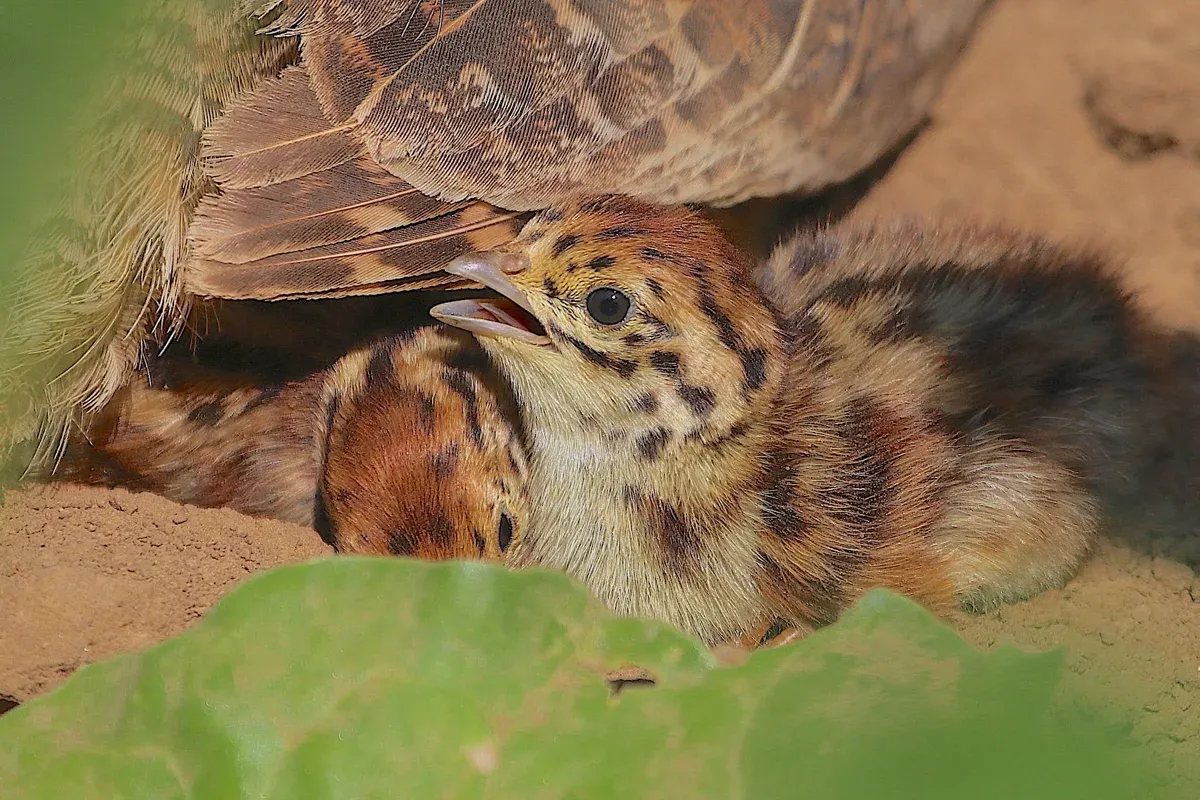
If the right support measures are put in place and accepted, this farmland bird, now rare, can quickly re-establish itself. In some model projects in Germany, these improvements have shown real effect. And so, even today, you can still hear the rasping call of the grey partridge at dusk.