The complexity of the world may stay the same, but as research advances, new horizons keep opening up and apparent certainties are unmasked as prejudices.
Myxomycetes were long considered a special class of fungi, a reminder of this misjudgment is their popular name: slime-fungi or their scientific name: Myxomycetes.
Fungi were long considered a type of plant. Today, "normal" fungi, such as bracket and stalk fungi, are "owners" of their own kingdom, situated between plant and animal. They grow in a fixed location, which is not typical of animals, but they need nutrients such as sugar from the outside, which plants, if they have the ability to photosynthesize, can easily forgo.
And the myxomycetes? What do they belong to? They are even more mysterious, because their life takes place not only in darkness, but also in phases that are hardly distinguishable, and at the same time oscillate between plant and animal. The independent kingdom of fungi is now joined by the equally independent and even more mysterious kingdom of Myxomycetes, the "blobs", as the myxomycete is called in the English-speaking part of the world.
The appearance
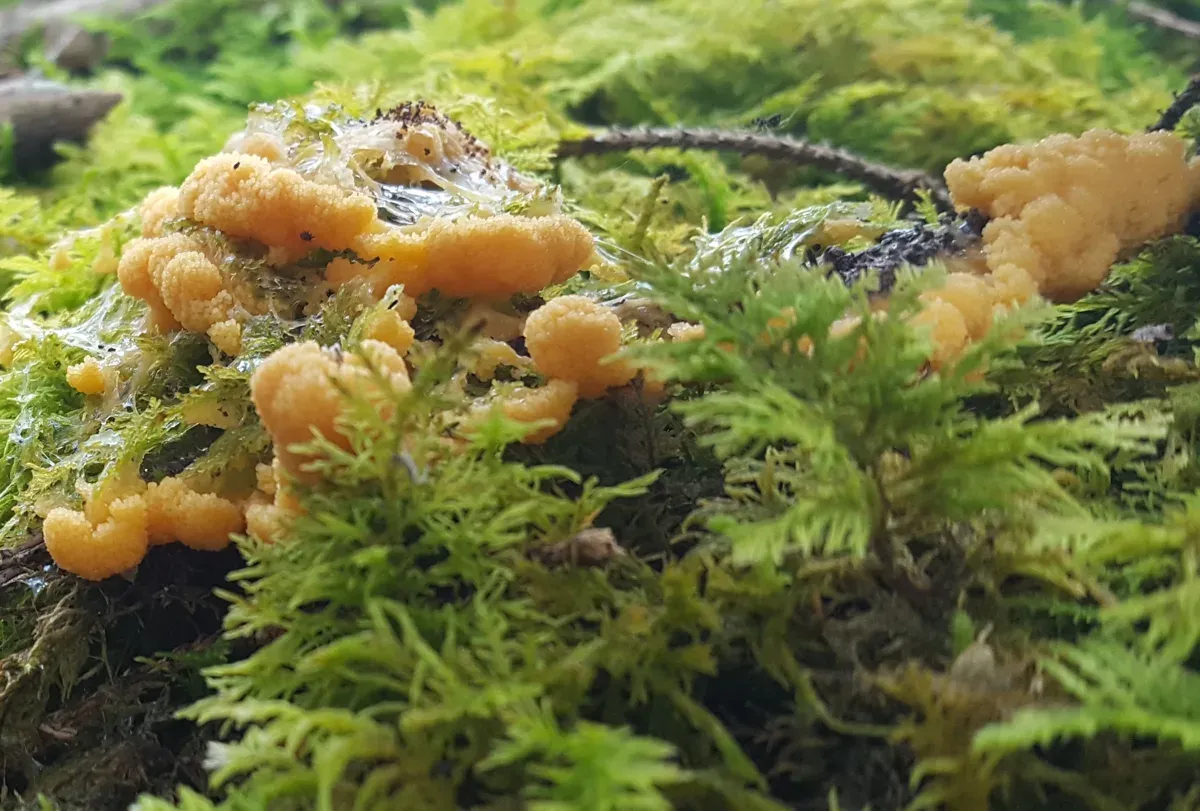
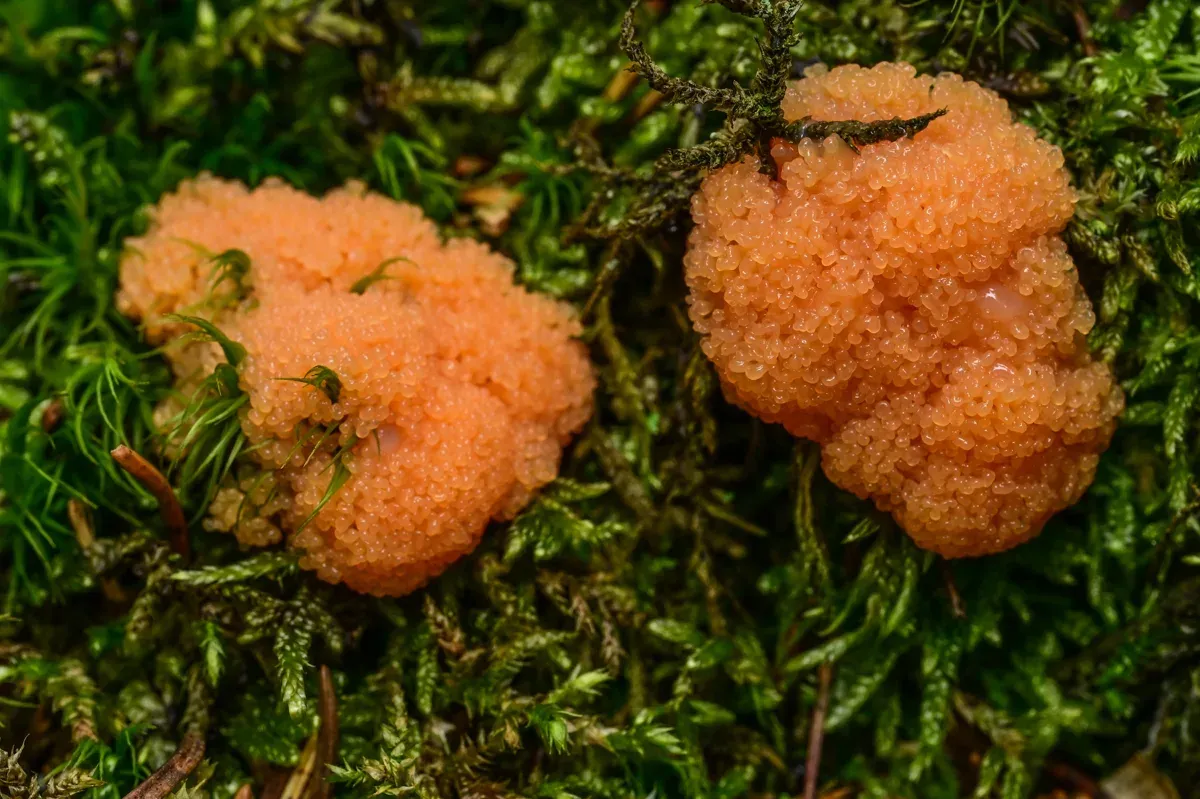
Slime, and usually colorless. In any case, not a sight that is pleasing to people who are not dedicated to these organisms. Except for some species, such as the yellow toadstool, which is also known as the moon-cabbage, the mushroom, or the dog's poop, that can be clearly identified as Plasmodium, the slimy trail of almost all other species, along with its slimy trail, is hardly identifiable with the naked eye and is usually only given a scientific name in Latin. But overall, one can say that the Plasmodium is similar to a largely two-dimensional coating or a flat cushion with a clearly pronounced filamentous structure, the "edge", as in the "center".
In principle, myxomycetes are even edible, that is: as far as we know, they are not poisonous. However, one usually does not eat them, but there are exceptions: the yellow toadstool, for example, is considered a delicacy when cooked – at least in Central America.
Phases in the life cycle of myxomycetes
The slimy and transforming creatures are far from being the only living beings that undergo metamorphosis. But once again, animal, once again plant, that is something truly unique. But let's go step by step:
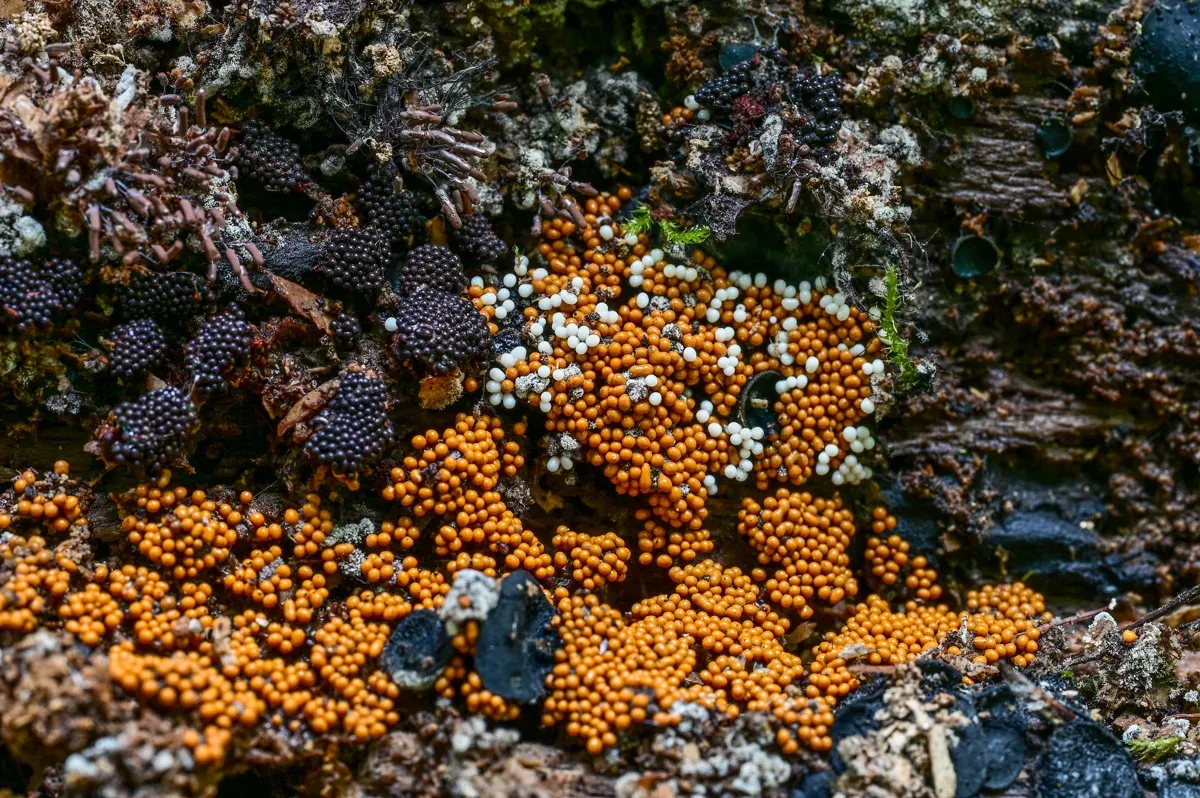
The growth phase - the big feast
Myxomycetes arise from spores, which are carried by the wind and other environmental influences somewhere, usually in the forest. If it is dark and humid there, the spore develops over several stages of growth into an amoeboid single cell, which is constantly on the lookout for food. This single cell, the Plasmodium, contains dozens, later thousands and millions of cell nuclei, in which the genetic information is stored, but only one cell wall. Sometimes the large cell constricts at a point and "gives birth" to an exactly identical creature (clone), which can then set off on its own.
The phase of the Plasmodium is the phase of feeding and growth, the creature seeks out bacteria, fungal spores, microorganisms and other organic matter, while grazing on the forest floor at a speed that is considerable relative to its size. It behaves like an animal in search of food. And it is almost intelligent. Like a bloodhound, it follows a trail, and in this search, it is surprisingly efficient. It finds the shortest path to food, avoids or "eliminates" disturbances, or adapts to them. It also does not go twice, it "knows" or "smells" where it has already been and where it cannot get anything anymore, and where it has encountered resistance before. And it can share its knowledge or memory with other similar creatures, usually its clones.
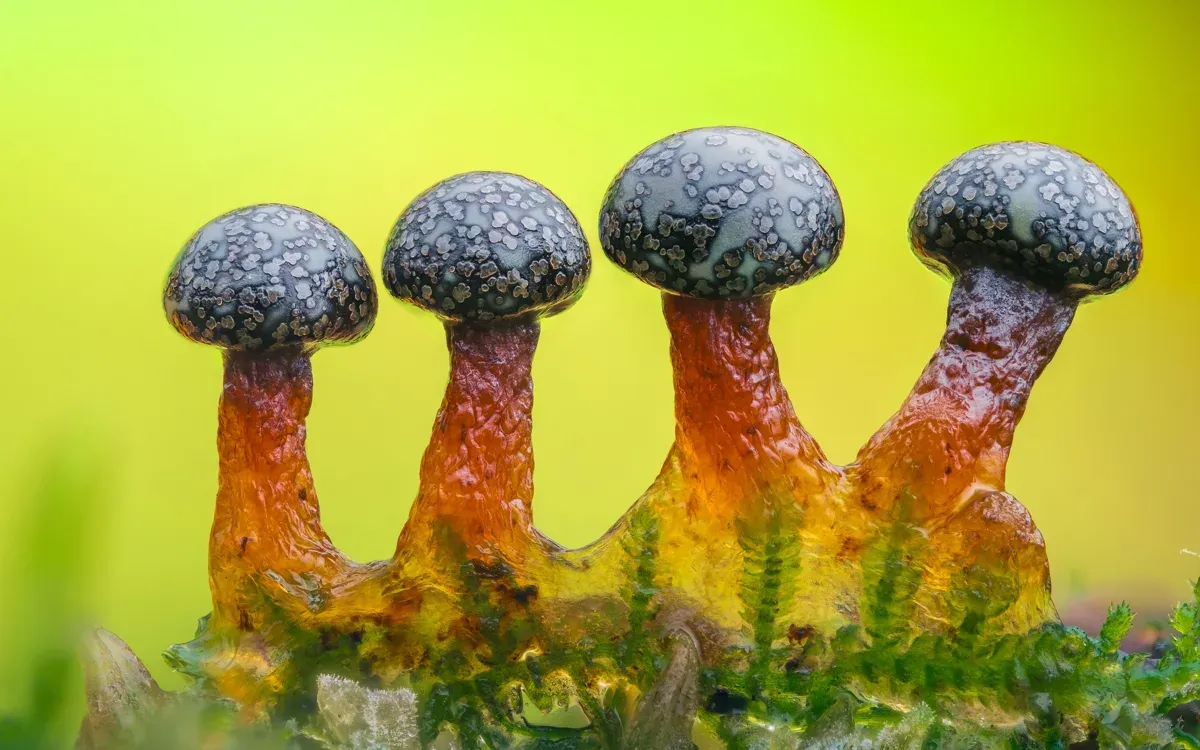
Movement and feeding behavior
But how does it move, and how does it actually feed? The movement takes place in two ways. Temporary pseudopods are formed by protrusion, with which it wanders. In addition, the pressure in its network of veins, the veins, pushes the whole thing in the desired direction. The fact that it is in the right direction is ensured by "swaying" messenger substances in the veins. The feeding takes place strictly in an amoeboid manner, the food is encircled, enclosed, and absorbed into the cell. Waste products are also expelled and left behind, just like in humans and animals - a slimy trail, which in turn can serve as food for other forest dwellers. And this slimy trail has it "in itself". Metals, bacteria and toxins that are taken up with the food are broken down, the breakdown products are not only interesting for plants and animals, but also for human medicine and research in general. By the way, the myxomycete (Myxomycete) does not damage the wood/soil in which it crawls, it actually only grazes it.
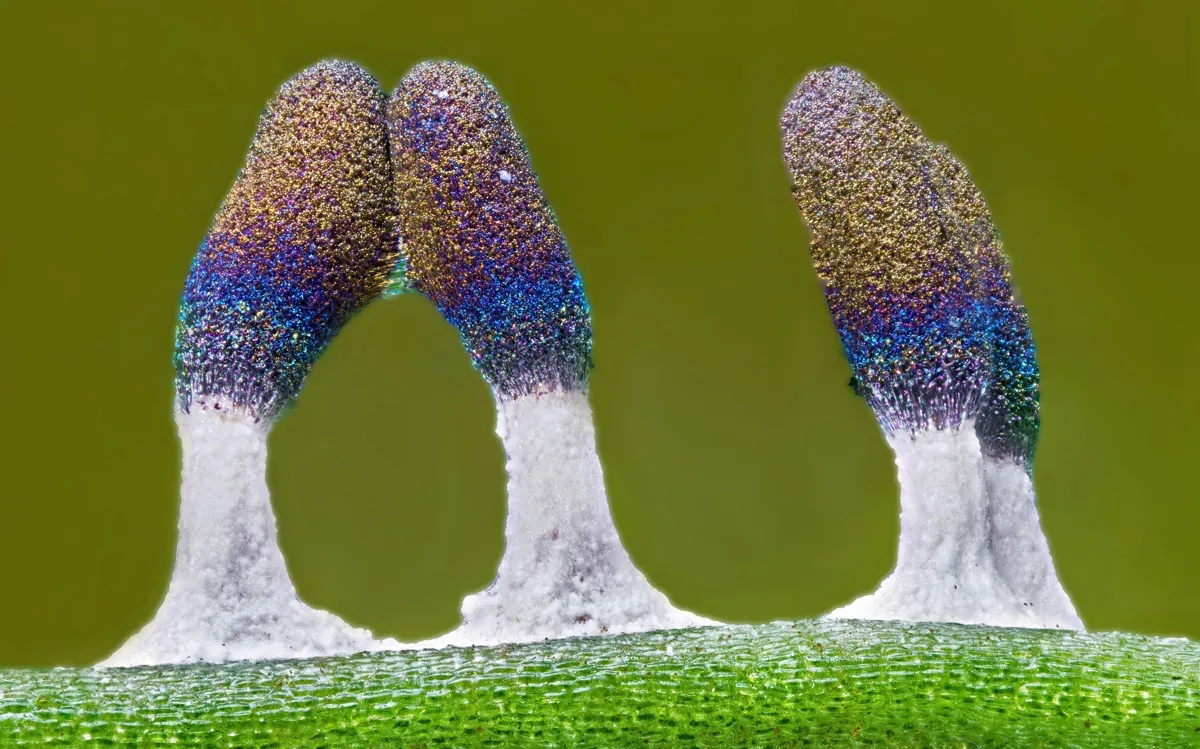
It is remarkable how such a flat and unstructured organism can move purposefully and grow larger while doing so. If you place a dried Plasmodium of the yellow toadstool – which is also available for sale – in a petri dish in a dark cabinet in the laboratory and moisten the specimen, you may be surprised in the morning, especially if there is food nearby. If you open the cabinet door, you may even lose your composure in the face of an overflowing, yellowish mass.
This property was likely very useful for the film industry in Hollywood, as it inspired the science fiction horror genre with fantasies about an alien slime mold that consumes everything: "Blob – Horror without a name", as the film is called in Germany. The basic idea is not that far-fetched, even if we set aside the general problem of extraterrestrial life. Our earthly blobs are also quite resistant to all kinds of attacks, extremely greedy, and not too picky when it comes to choosing and absorbing food.
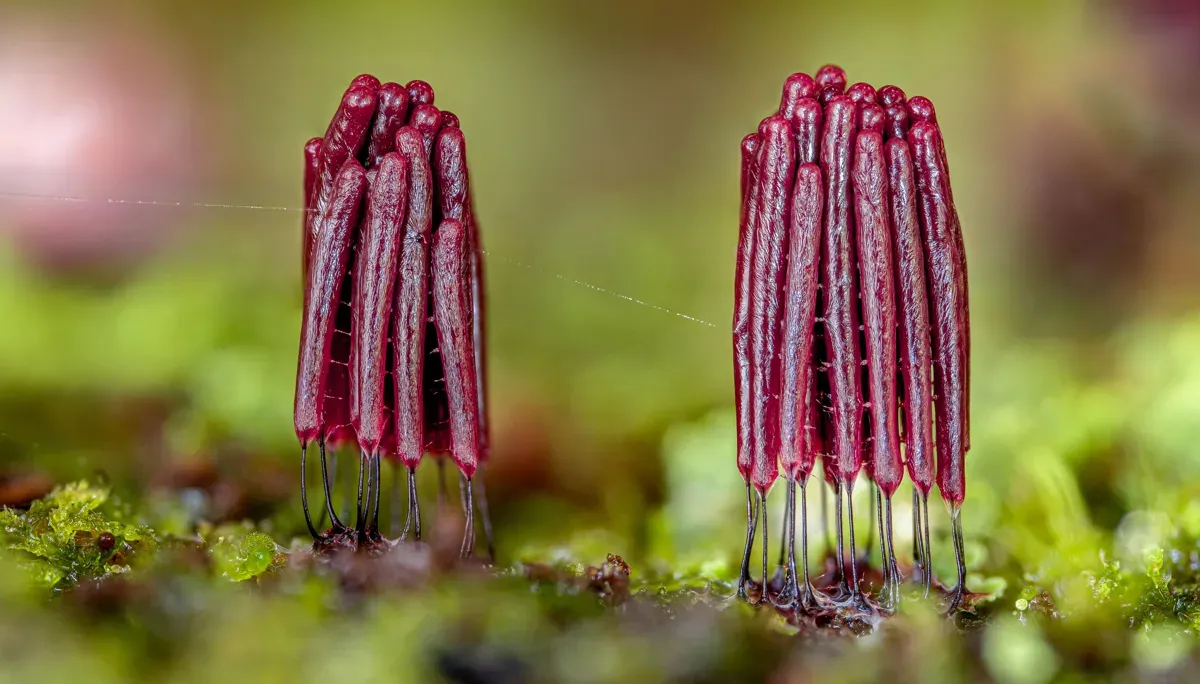
The phase of reproduction.
Eventually, the phase of feeding ends, as does the avoidance of light. The last movement in the cycle is a hike. Now, light is needed (positive phototaxis), as where there is light, there is usually also wind.
This, supported by other secondary dispersal helpers, ultimately ensures the multiplication. If a suitable place is reached, usually on a tree stump or a lying trunk, the movement ends, and plant-like behavior begins.
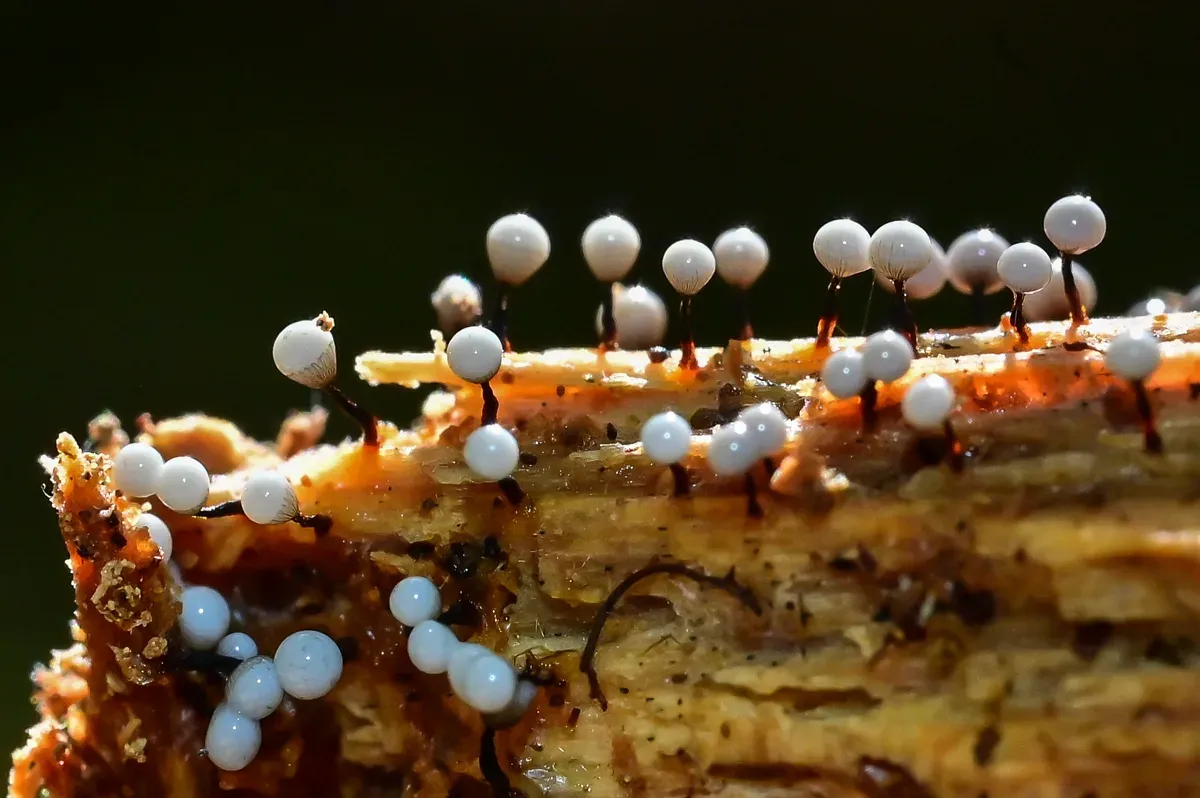
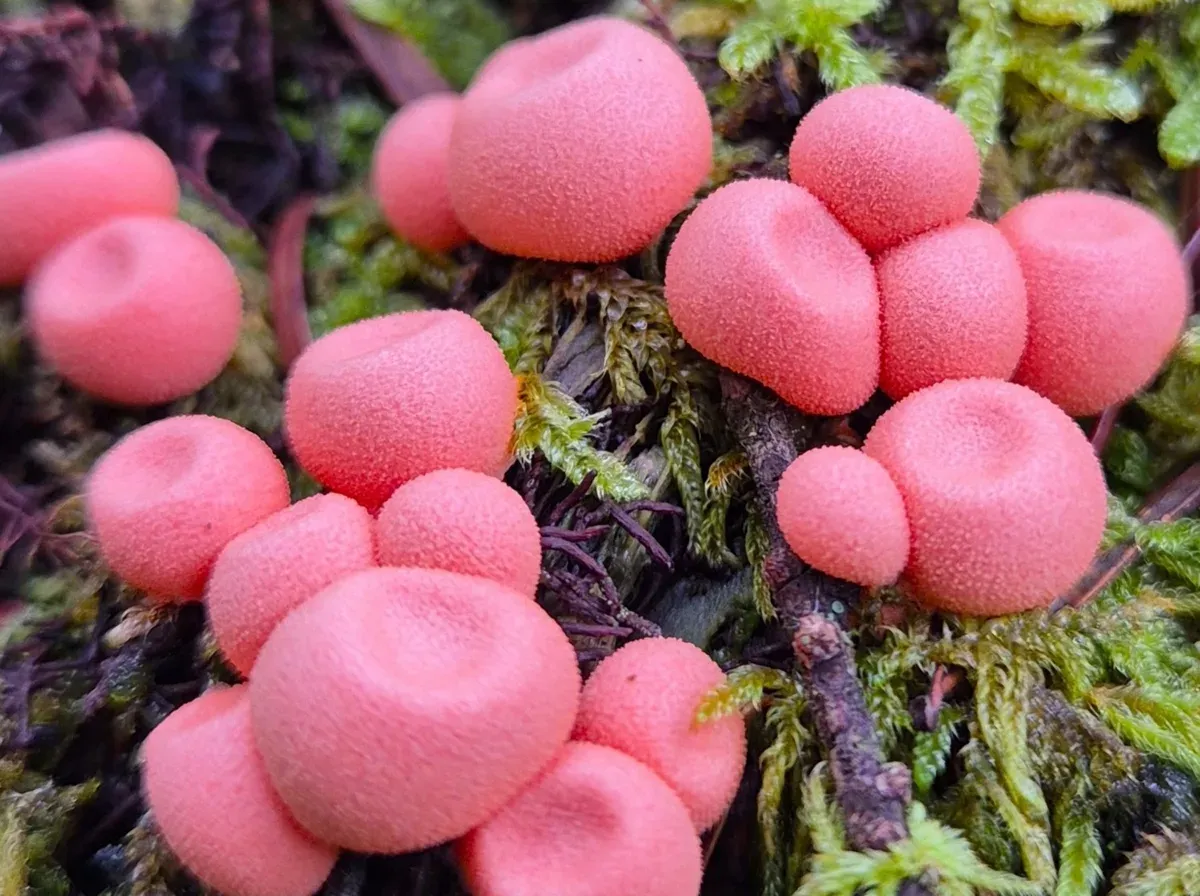
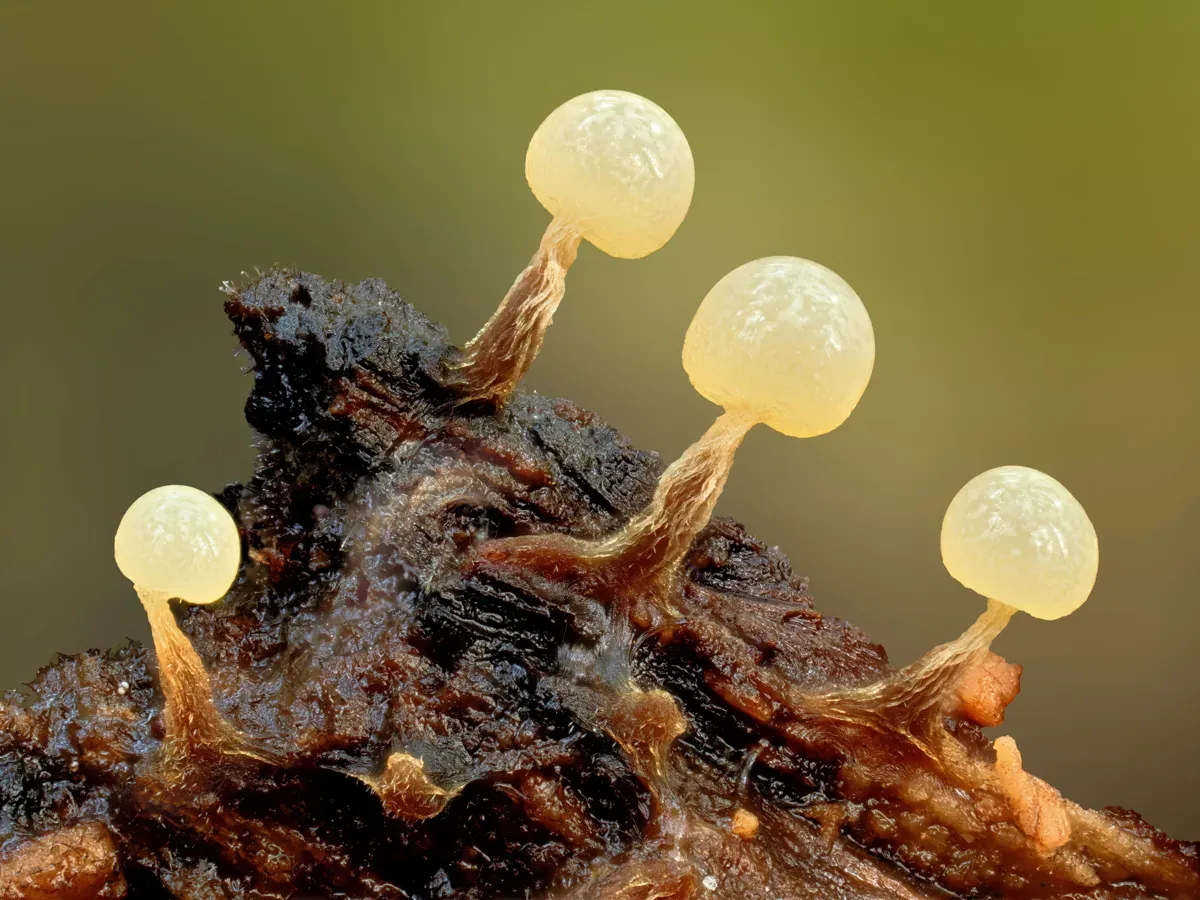
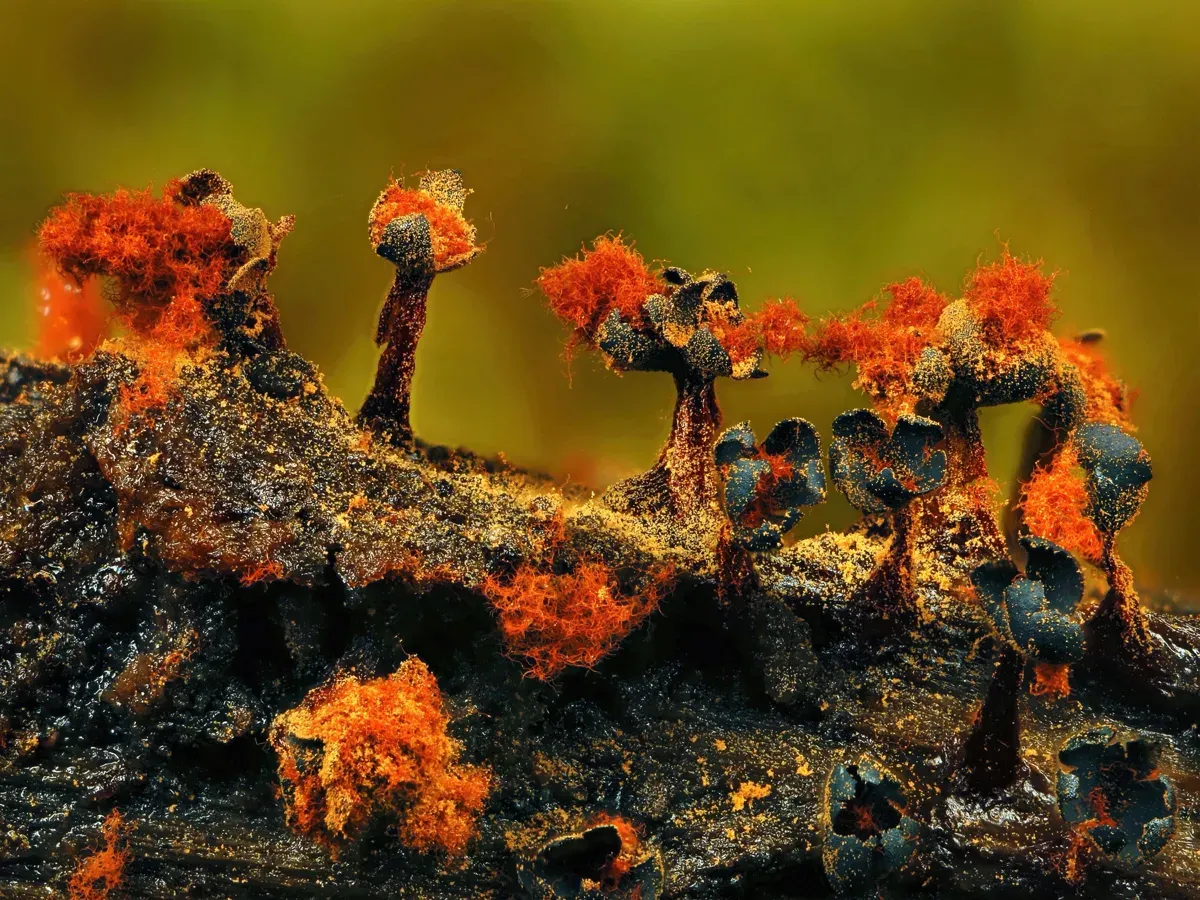
From the mass of the plasmodium, which is thus molded into something like a skin, small stems grow, at the ends of which are spore containers (sporocarps). These are usually spherical, but cylindrical forms also occur. They are the stars of macro photography. As in "Beings from another star", they appear in countless forms, shapes, and above all – colors. In this stage, you can also recognize and unambiguously assign most species.
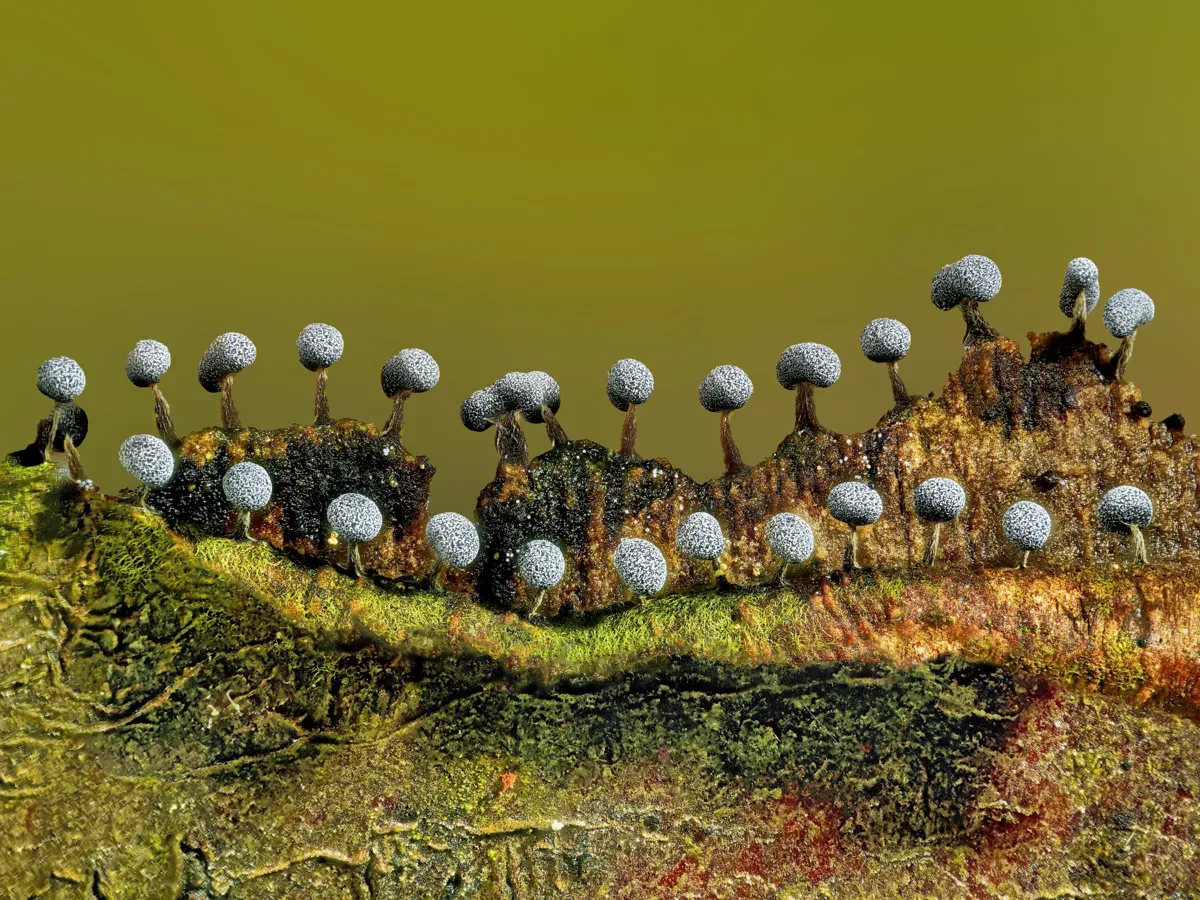
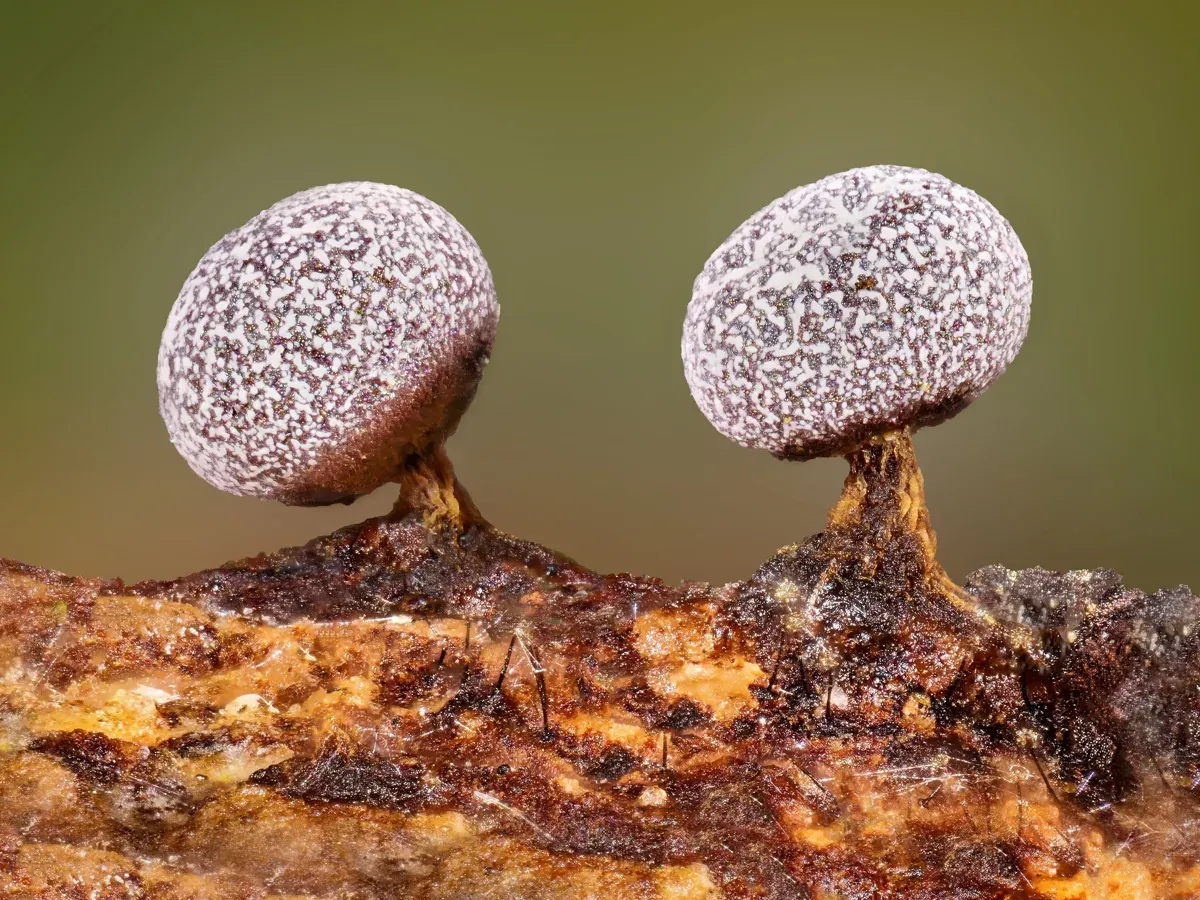
Once the spores are released, the life cycle is complete – or not, that is not always clear. In any case, the entire organism, which consists at this point only of the dried fruit bodies, a kind of dry skin as a base, and remnants of the slime trail, dries out. This is usually a final state, but it does not always seem to be the last word. During the feeding phase, the plasmodium, like the fruit bodies, can form a survival form (sclerotium) if the conditions are unfavorable, for example, if it is too hot and dry, and can survive for several years. When the conditions improve, it comes back to life.
The slime mold and humans.
Naturalists and biologists are not the only ones interested in Myxomycetes. Pharmacists, geneticists, and biochemists are following their resistance to damage, while physiologists and neuroscientists are again pondering the nature of intelligence and its prerequisites. Environmental biologists and conservationists want to use their skills to detoxify soils, break down oil spills and microplastics, and city planners study the procedures of blobs when designing infrastructure. Nature pharmacy and bio-engineering are also in demand.