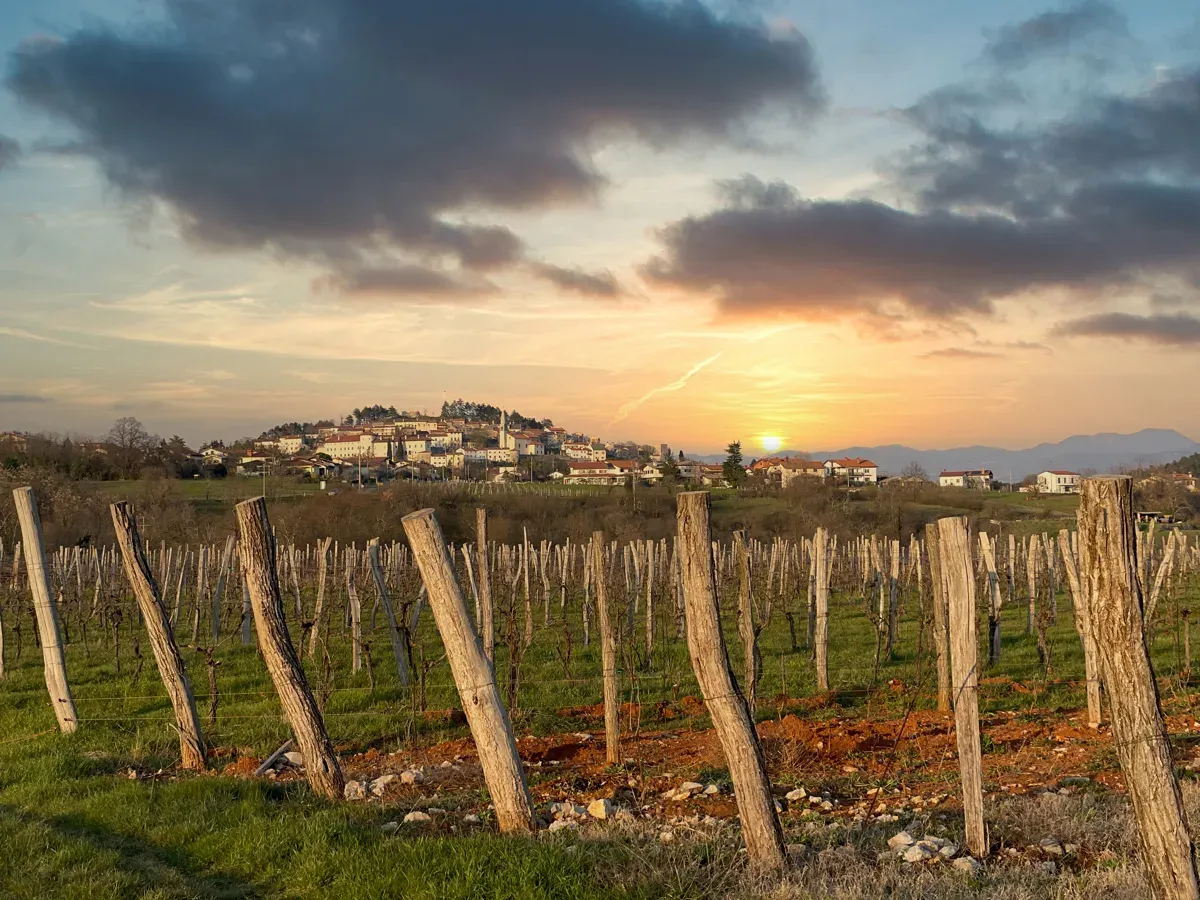
Not for the first time, we are drawn to the Karst region in Slovenia, the proximity is tempting, only 382 km to be covered between Seekirchen and Štanjel. 4 hours of driving and everything is different. High above the Gulf of Trieste. The sea in sight. Mediterranean climate. Unspoiled nature. Everything invites you to hike, enjoy, and relax. The red earth, terra rossa, colors the landscape and is a flavor component for many delicacies that this region produces. Different, from pleasantly herbaceous to intoxicatingly sweet, is what grows and matures in this soil with traditional methods to excellence. First, the wine, "Kras Teran", an iron-rich, tannic red wine made from the Refošk (Terrano) grape. According to a hypothesis, it is the ancient wine Pucinum mentioned by Plinius the Elder (23-79 AD). The colorful, full-bodied red wine is attributed with health-promoting properties. Formerly, it was sold as "medicine" in pharmacies. Also, the typical Karst ham, the most famous meat product from the area, characterized by coarse sea salt and the Bora of the Karst. It must mature for an average of one year in Borawind. These are just two examples from 24 gastronomic regions and 3 wine-growing areas of Slovenia, but the Karst is unmistakable in its taste.
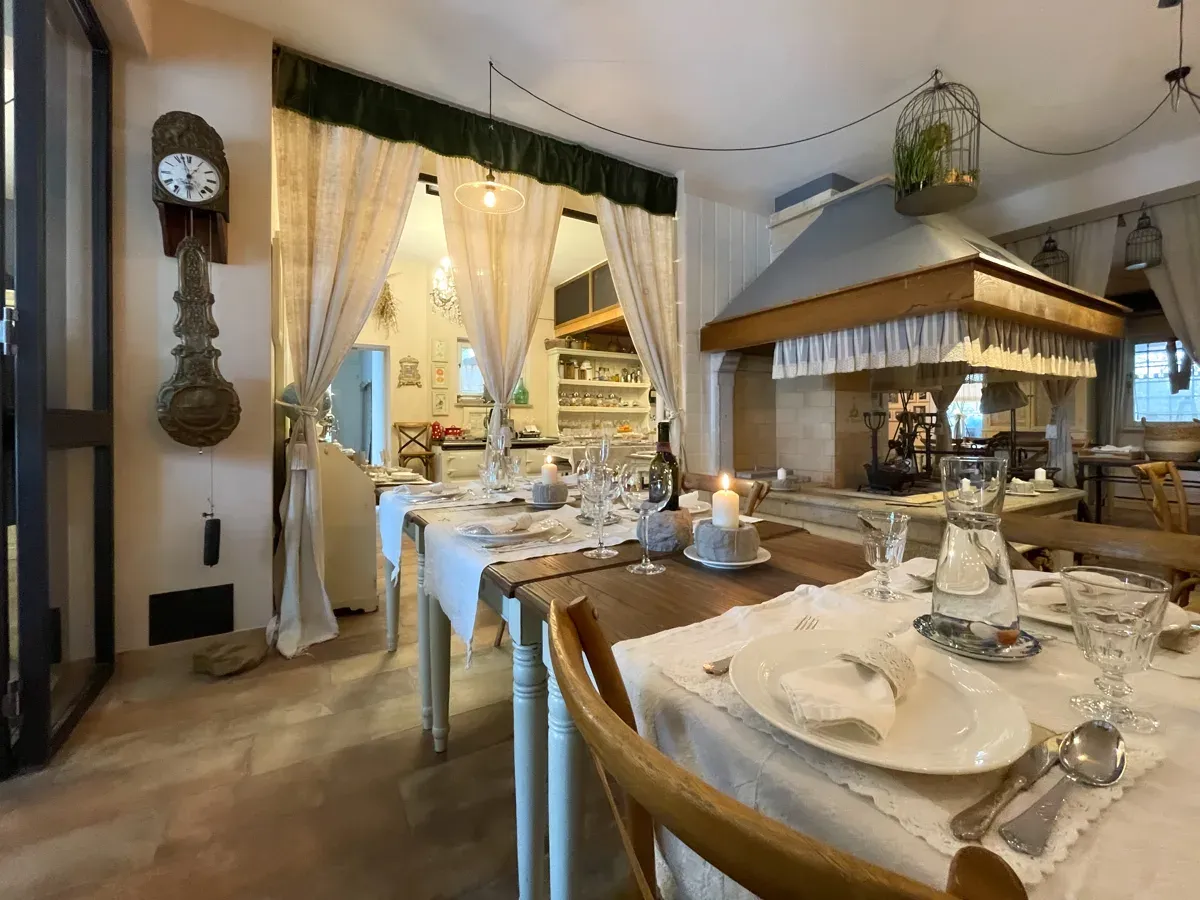
Our base station is this time the Biohotel St. Daniel in Hruševica, lovingly run by Nina and Miran, a quiet place in the Karst, where you can relax and forget the everyday stress. Wake up late, gain new energy, and recharge. The breakfast buffet with organic and local foods is legendary. Recently, there are also two charging points for our electric car, which makes many things easier and more carefree. Hruševica is located very close to Štanjel, a medieval village, Pearl of Karst architecture and a unique cultural monument. It extends as a terraced village on a hill, with a castle complex, watchtowers, and a lemon-shaped bell tower. As one of the oldest settlements in the Karst, it has preserved its original charm and stands out with the innovative architecture of Max Fabiani. His most famous legacy is the Ferrari garden, which belongs to the Villa Fabiani and delights not only romantics.
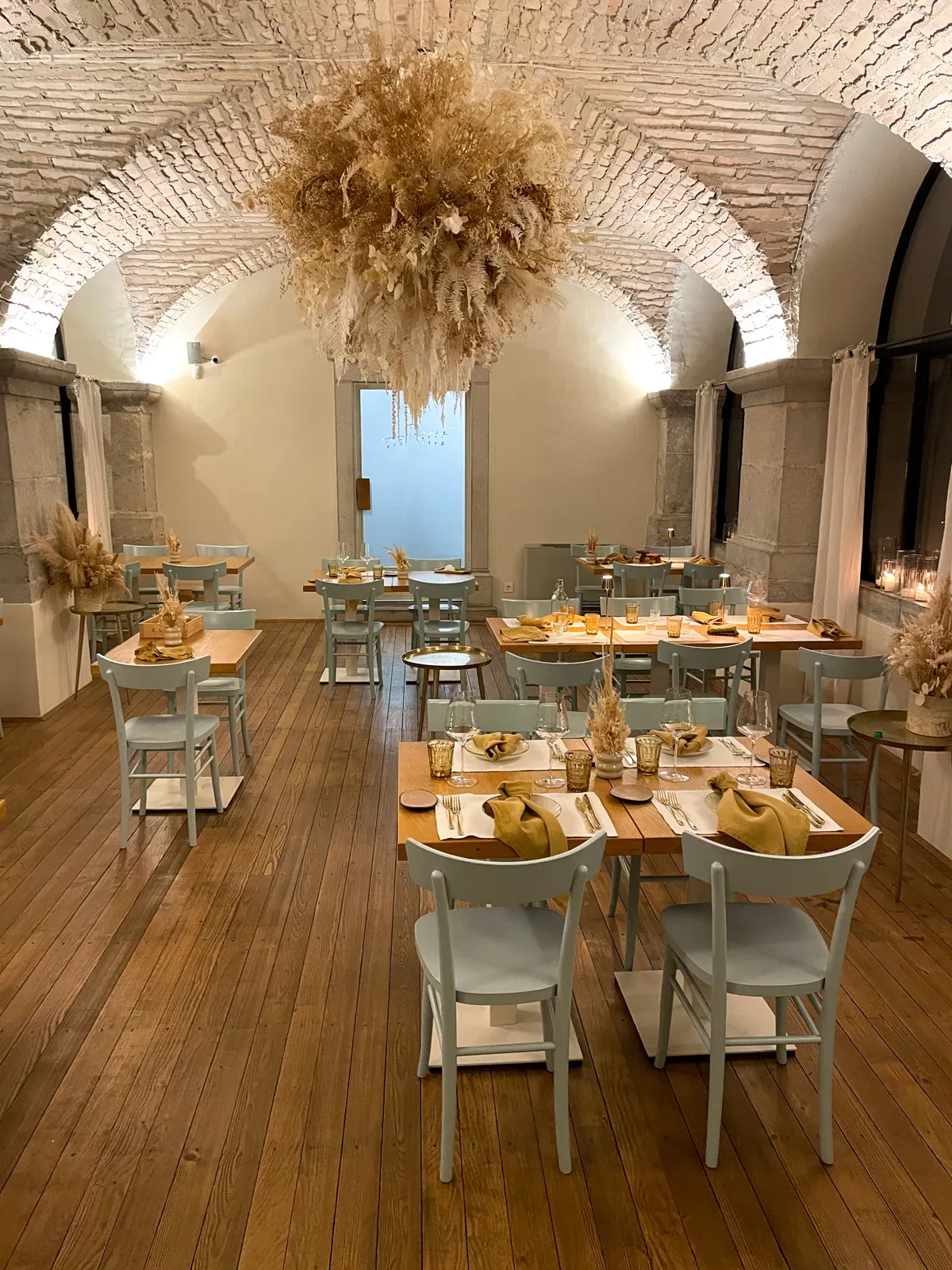
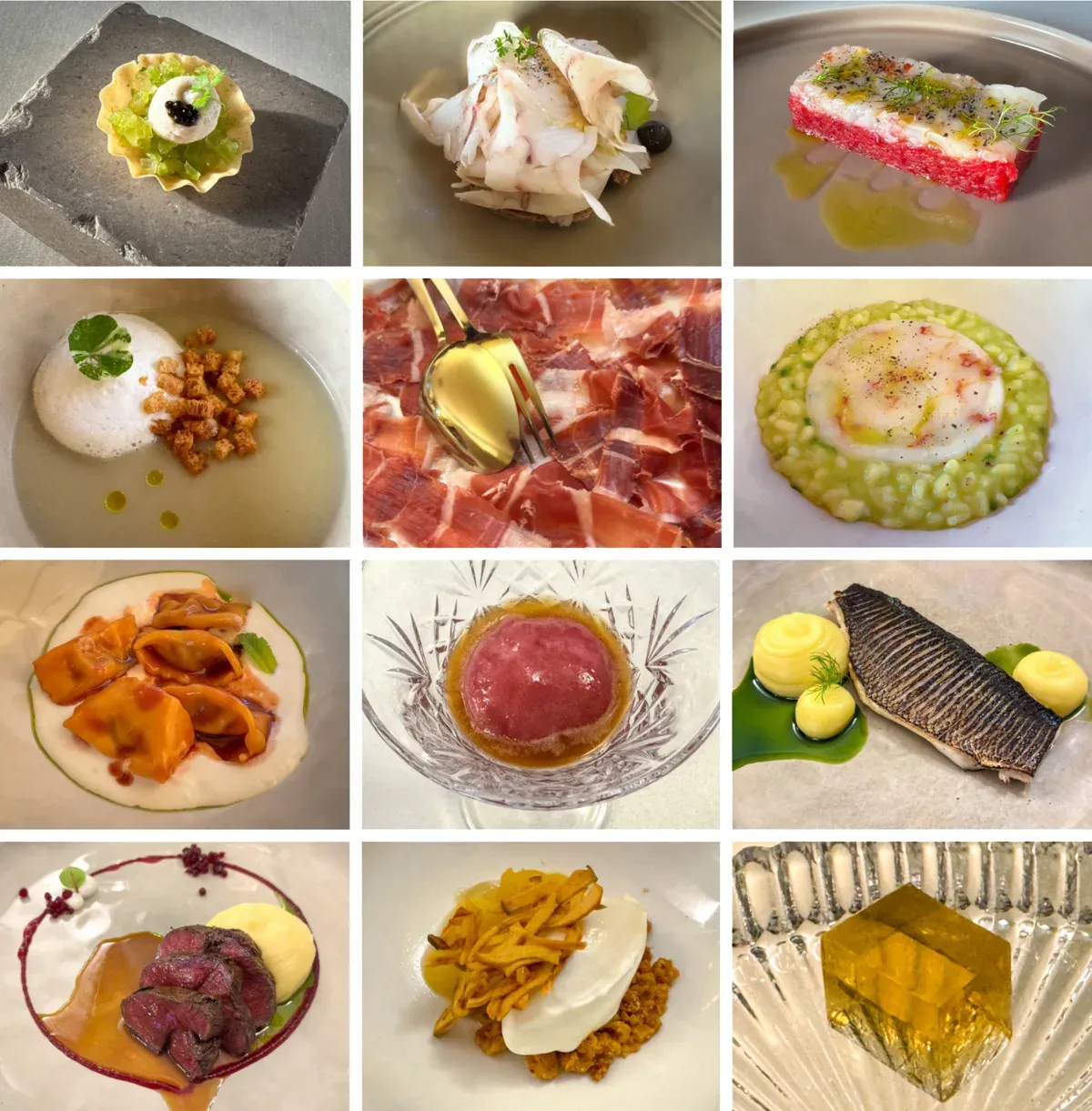
The dinner is planned in this castle complex, in the Bistro Grad Štanjel in the heart of the medieval castle. The Komel family runs this restaurant as a second home. The father rules in the kitchen, the mother takes care of the service, and the daughter presents the dishes with a lot of love and knowledge. Here is the 6-course menu in words and pictures, although both probably cannot represent what we experienced with our taste buds.
The great menu:
- Octopus carpaccio on potatoes, pomegranate, black olives, buckwheat, walnuts and parsley
- Beef tartar from beef fillet, crowned with prawns, garnished with lemon, orange and fennel
- Fennel cream soup, broth from wolffish, potatoes, garnished with lemon foam and thyme
- Intercourse: Tasting of homemade Karst ham
- Risotto with wild asparagus with lobster shell
- Homemade ravioli, filled with lamb from the local Čilčevi farm on organic yogurt from the Čilčevi goat, garnished with mint
- Sea bass fillet on smoked potato puree
- Filet of local deer with parsnip puree and red beet, horseradish and Estragon
- Zidarič cow yogurt ice cream with apple crunch with almonds, hazelnuts, ginger and cinnamon
The wine to the menu: A Malvasija Istriana from Vinogradi Fon, a salty-fruity delicacy: citrus, peaches, mixed with herbs, hay, fresh flowers and candied orange peel. The most elegant and light white wine from Fon, fresh, dense, with very little tannin and medium acidity. It grows on small, ancient vineyards, mostly pergolas, which offer a unique biodiversity amidst the forests - always with fruit trees between the vines. The winemaker Marko Fon is deeply rooted in the tradition and history of the Karst and knows the Karst soil. A taste of heaven!