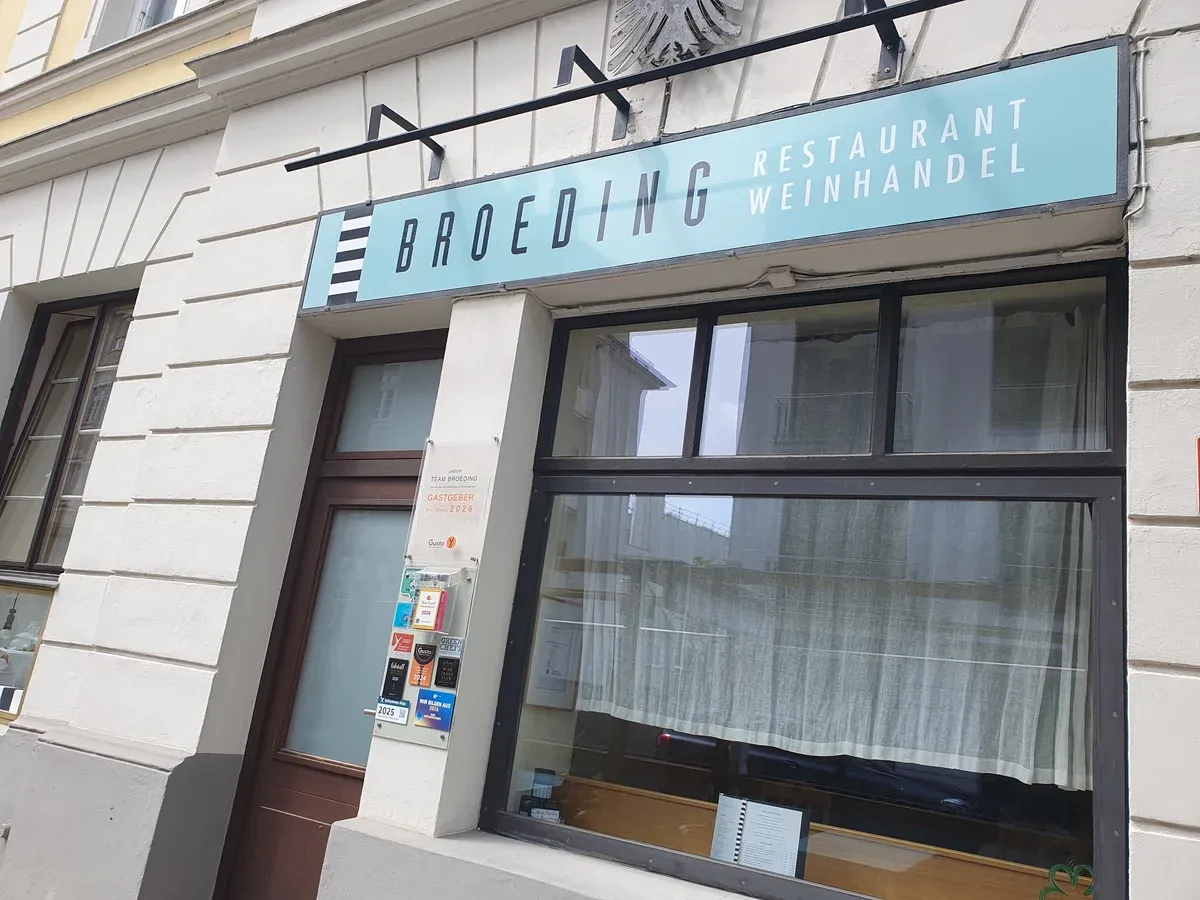
When a restaurant in a major city remains true to its specific approach for 36 years, and this is precisely why it is successful, one can rightfully speak of a culinary institution. In the specific case of "Broeding" in the Munich district of Neuhausen, even a consistently shining star in the gastronomy scene. Although without the famous star, although at the same level.
Special concept: Menu instead of à la carte
When reading the lyrical self-descriptions of some restaurants, as if they were written by clever marketing experts, the Broeding team gets straight to the point:
"Clarity and precision in the restaurant, on the plate, and in the glass. Therefore, a menu."
So, a single, perfectly coordinated and daily changing menu, with three, four, or five courses instead of an extensive menu. With the exception of the wine selection, which is offered to guests and buyers from 30, primarily Austrian, wineries. Guests benefit from the expert advice of two sommeliers when choosing the appropriate wine for each course. A special feature is that guests also have access to a specialist for non-alcoholic beverage accompaniment. He ferments, prepares extracts, and creates new drinks that are suitable for the menu.
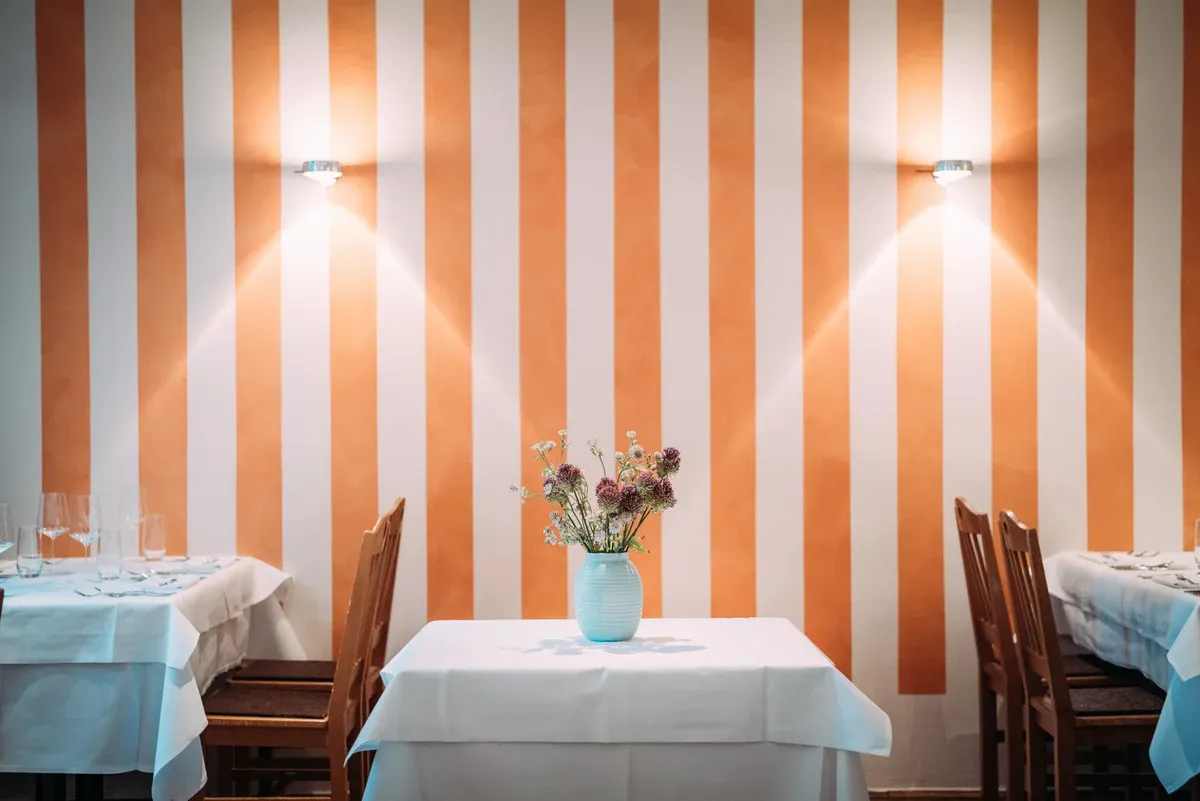
The dining room with its simple wooden chairs and the characteristic striped look on the large wall offers space for 45 guests and creates a very pleasant atmosphere despite its practicality.
In the summer months, the gourmands can also enjoy themselves in the "Schanigarten" in front of the restaurant.
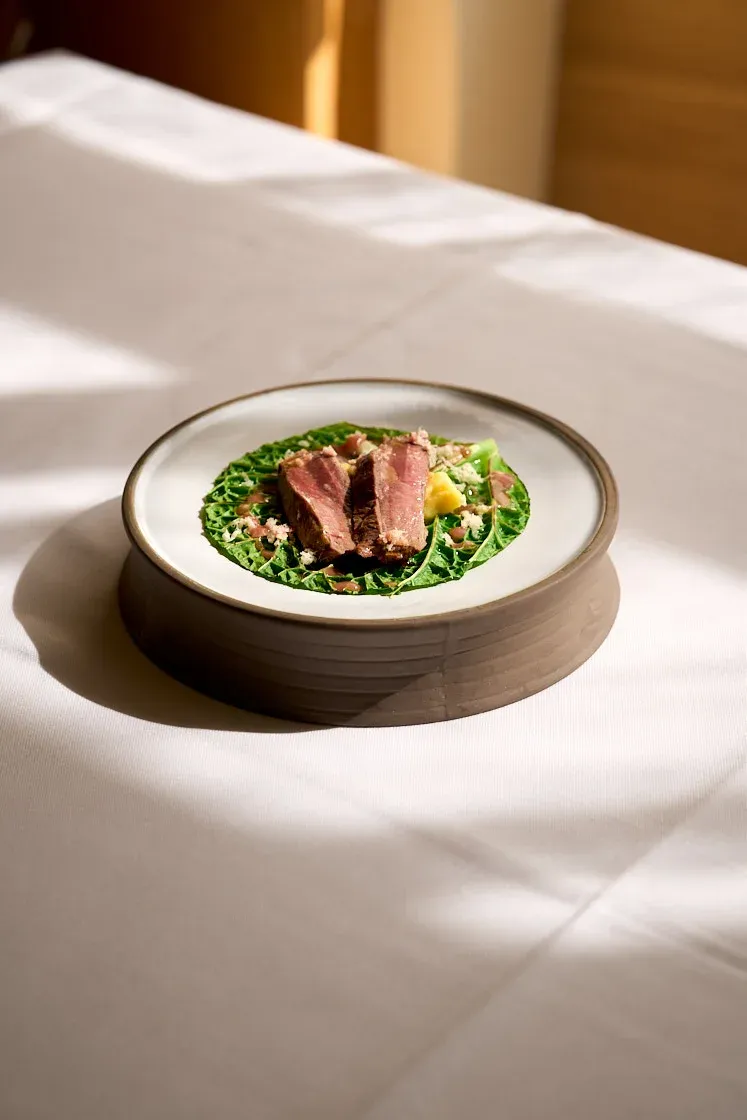
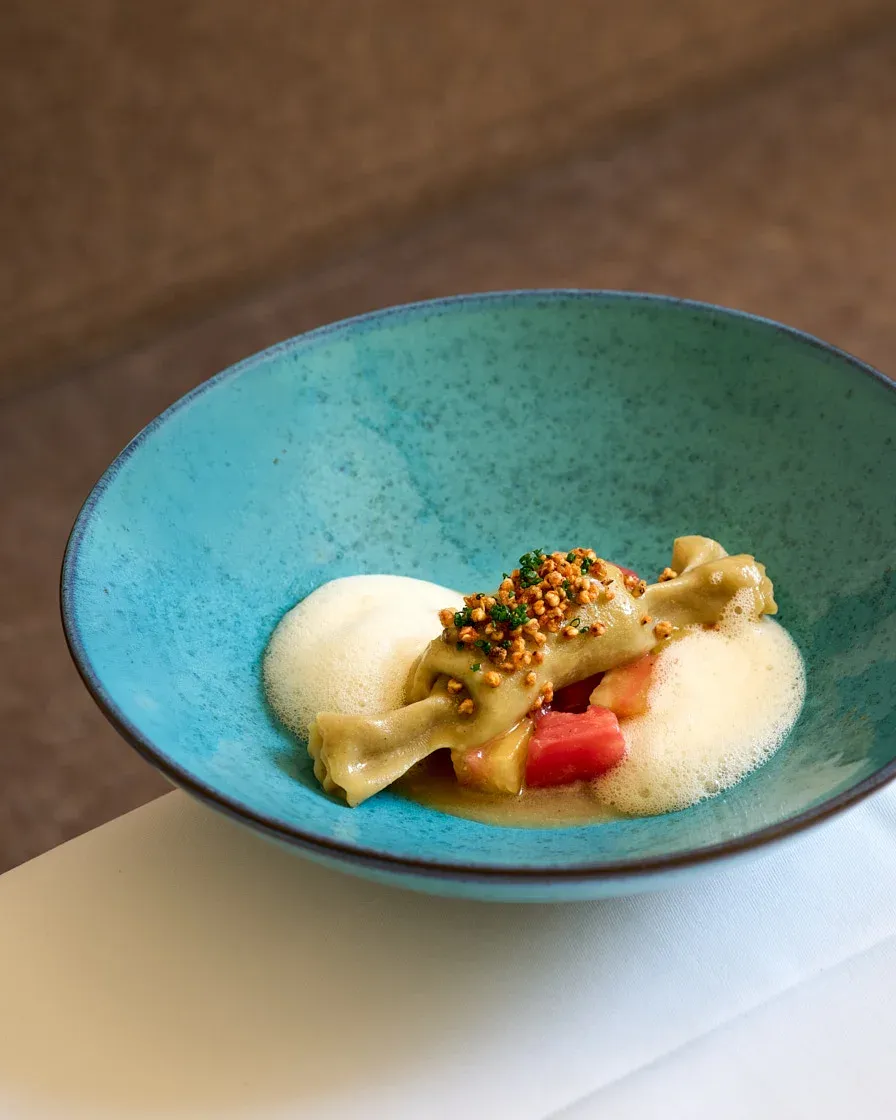
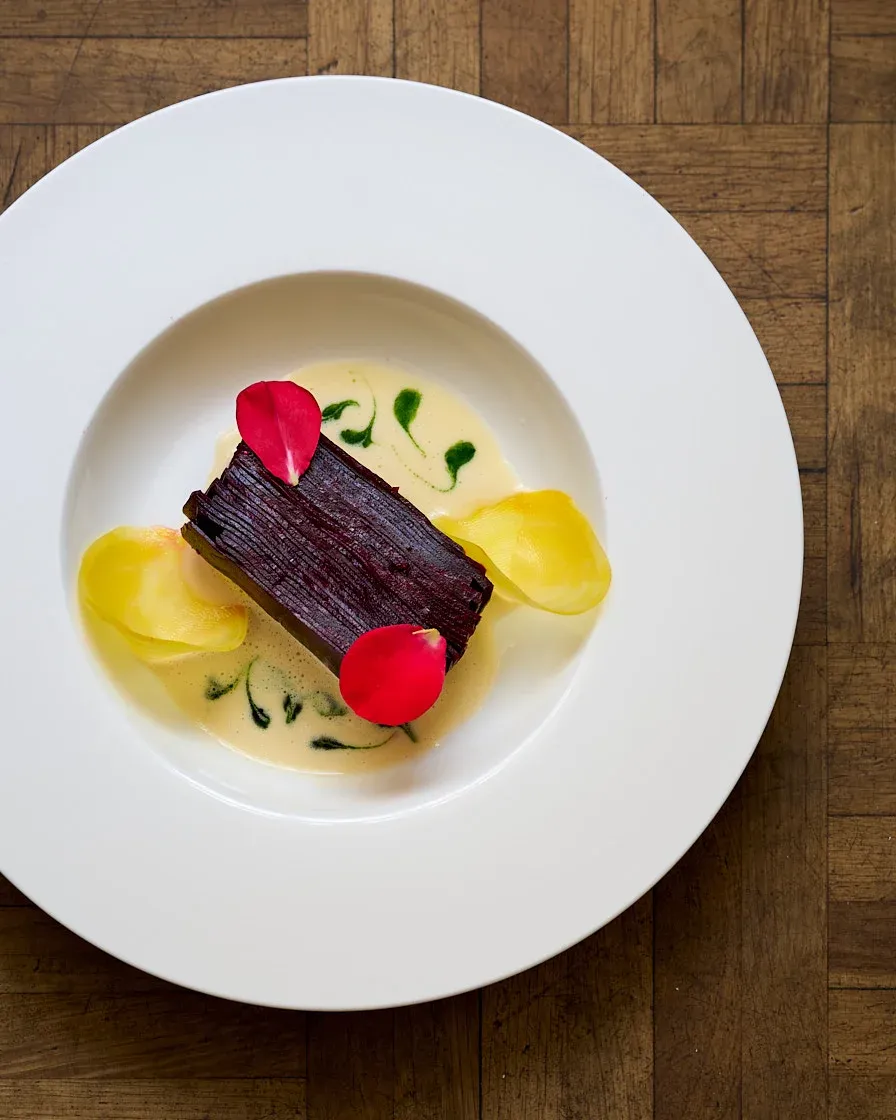
On the day that I started writing about the phenomenon of Broeding, the menu was waiting with the following courses and dishes:
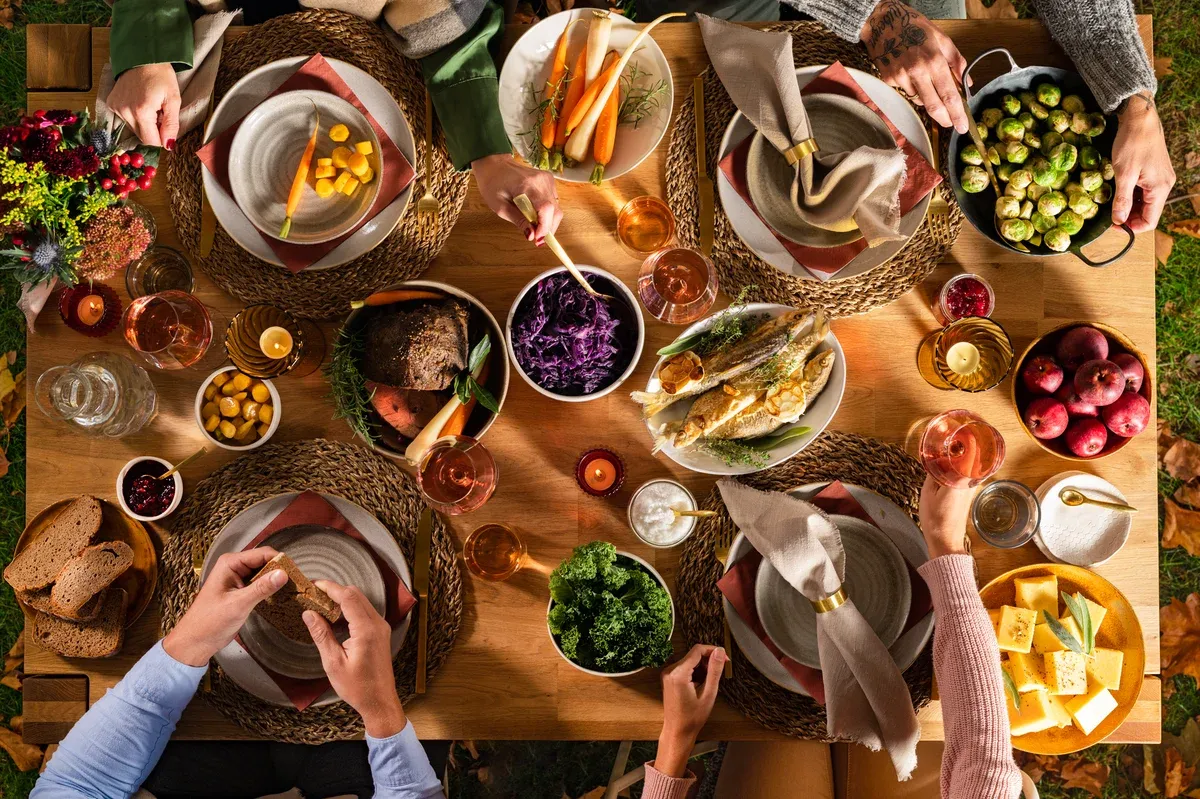
An evening at Broeding does not offer a spectacular presentation, no background music, no decoration, but simply the concentration on the essentials, namely a product-focused taste experience with seasonal and regional ingredients. Friendly service included.
The Team
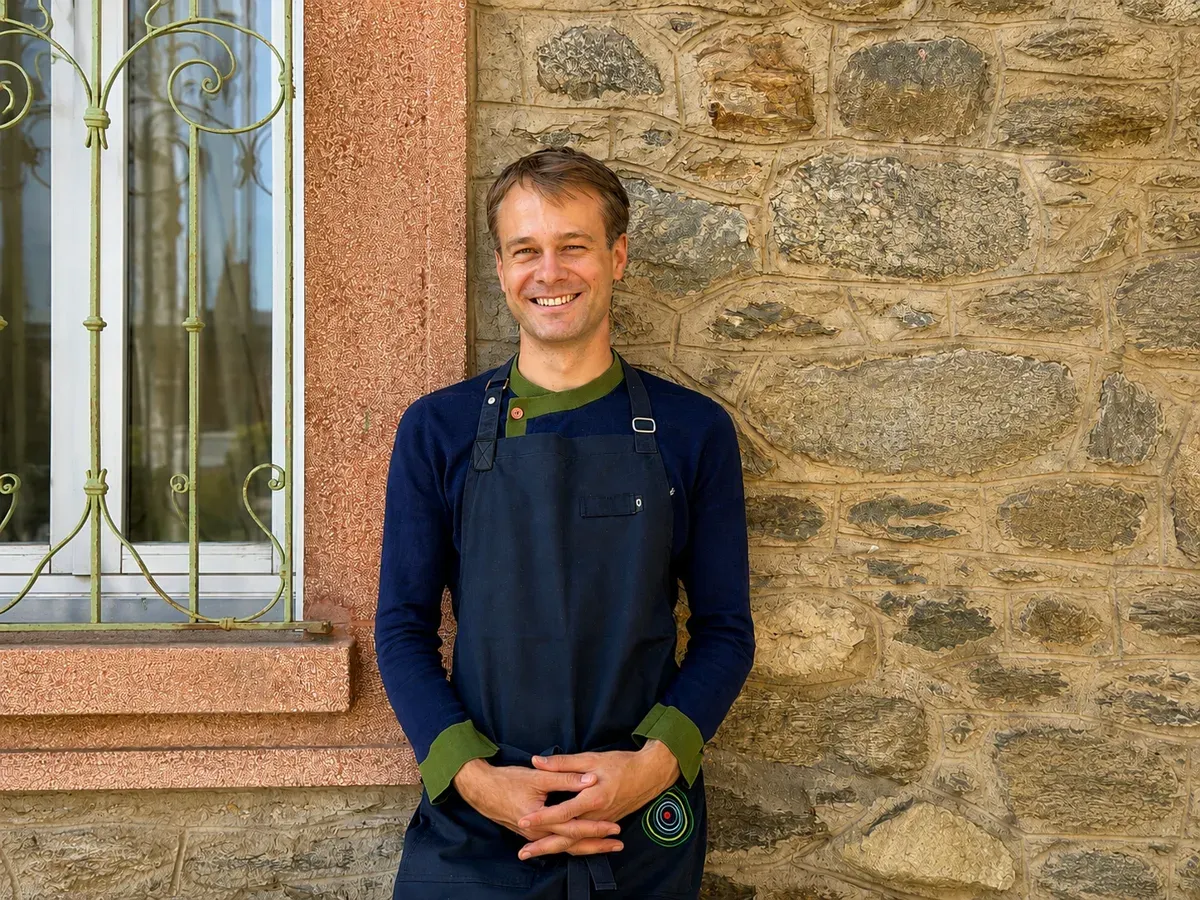
I had already dismissed the idea of meeting with Chef and co-owner Manuel Reheis to conduct an interview with him, or at least a thematically structured conversation. Too much exciting information is known to the top chef, and too many follow-up questions would spontaneously occur to me. So, I simply plunged into the matter with the question about the name of the restaurant. It is, of course, dedicated to the founder of the business. But far from it, in 1990 there was not a single founder, but a collective of seven people, and they wanted to make a culinary reference in the naming process. Initially, a wine plot in the Wachau was considered. After this was rejected, the Elsässer Saibling, i.e. the Broeding, was finally chosen to be honored. This breeding form is the cross between a female Bachsaibling and a male Seesaibling and is a delicacy, and therefore perfectly suited to the culinary aspirations of the team around Chef Manuel Reheis, who joined in 1995. Initially as a chef, later as a head chef and partner. Today, he operates the restaurant together with founder Gottfried Wallisch, with Sous-Chef Benny Darchinger assisting in the kitchen, a recognized expert in vegetarian and vegan dishes. He previously worked at the "Tian" at Paul Ivic in Vienna, and then accompanied the Tian branch in Munich for three years, which was the only vegetarian restaurant in Germany with a Michelin star at the time.
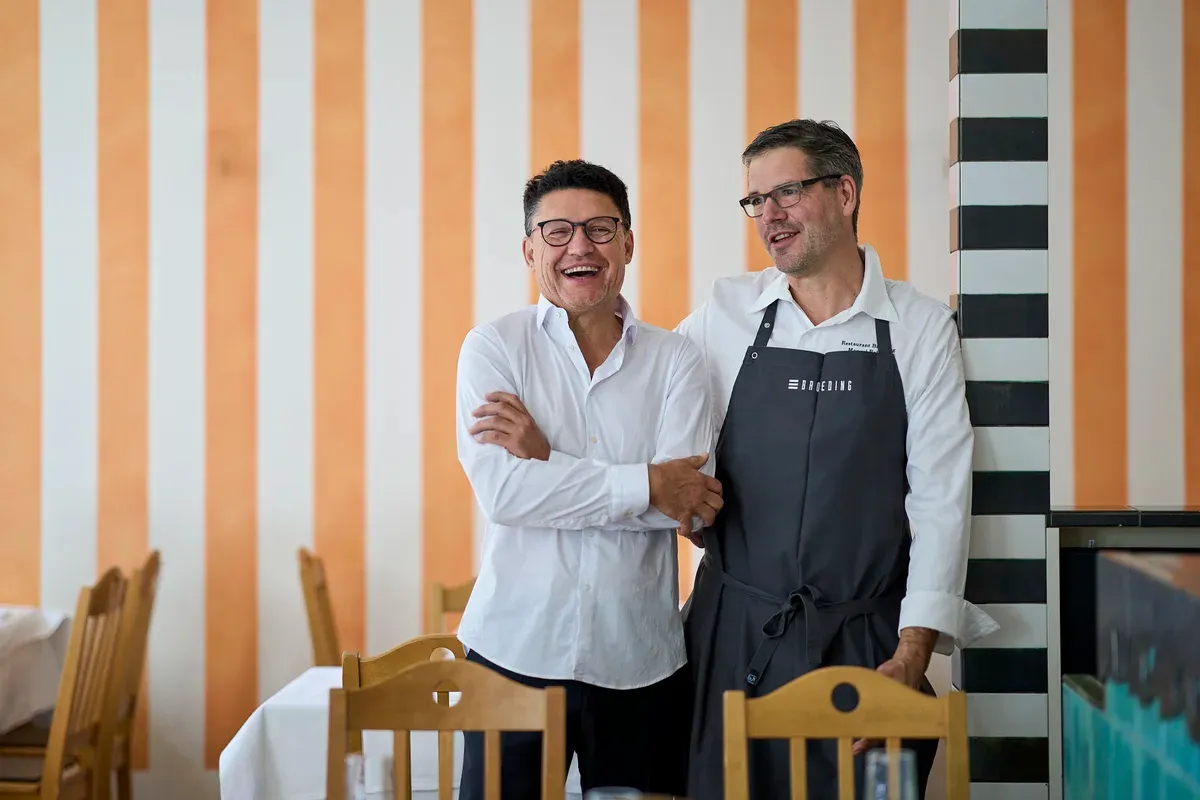
Manuel Reheis, a chef with a clear concept
"Because a chef can impress people," is Manuel's witty answer to the question about the reasons for his career choice. He had already shown an early interest in preparing dishes, as his family had always cooked well. His grandmother spoiled him with hearty Bavarian dishes, his mother provided him with Mediterranean specialties that she had learned during her time as a Au-pair in France, Spain, and Portugal. But his path to an ambitious chef was not predetermined. So, after graduating, the native Munich resident was initially at a loss as to which path to choose. When he finally, at the last minute, inquired at the employment agency about open apprenticeships in the fine dining sector, he unexpectedly found the perfect entry into the profession at the renowned Pfeffermühle in Unterhaching.
Manuel Reheis's concept is clearly defined. Regionality and seasonality are the guiding principles of his culinary approach. He places a high value on obtaining healthy vegetables in organic quality without long transport times and therefore freshly delivered. His gardening partners, with whom he is constantly in contact, all use no intensive farming and pesticides.
The calves come from Demeter and BioLand farms-Farms,The cattle and chickens come from small producers and the Steinschaf from the Arche-Farm "Wolle&Kraut", which we have already presented in detail in the "Sorten & Rassen" section.
Wines such as those from California, Chile, or Australia, which are transported around the world, are no longer found here. Instead, guests can enjoy selected specialties, primarily from top Austrian wineries.
Commitment to the "Chef Alliance" of Slow Food
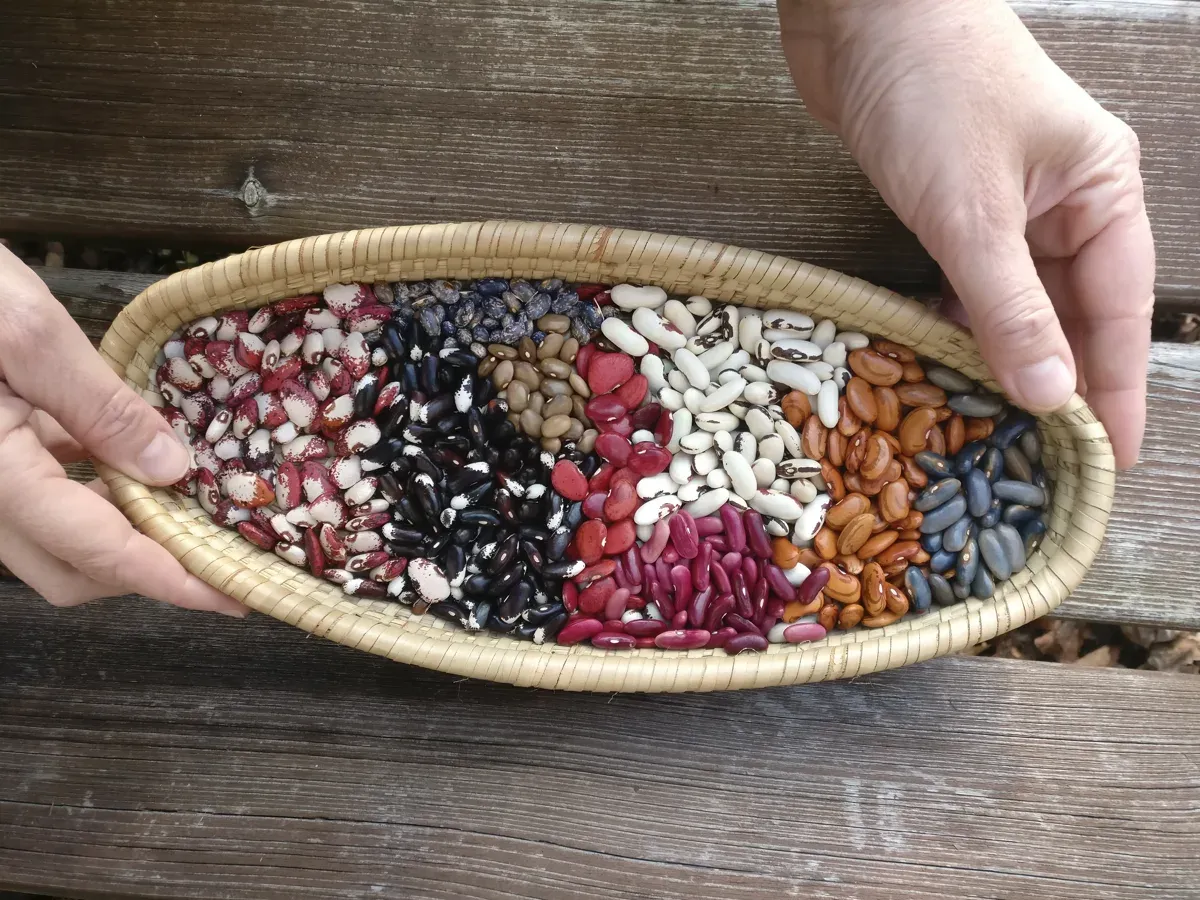
Manuel Reheis's approach goes beyond these features. Not only the use of regional products from small, farm-based businesses is in focus, but he is also particularly keen to present his guests with as wide a range of old cultural varieties as possible. This is due to their flavor variations, but also to contribute to the preservation of genetic diversity.
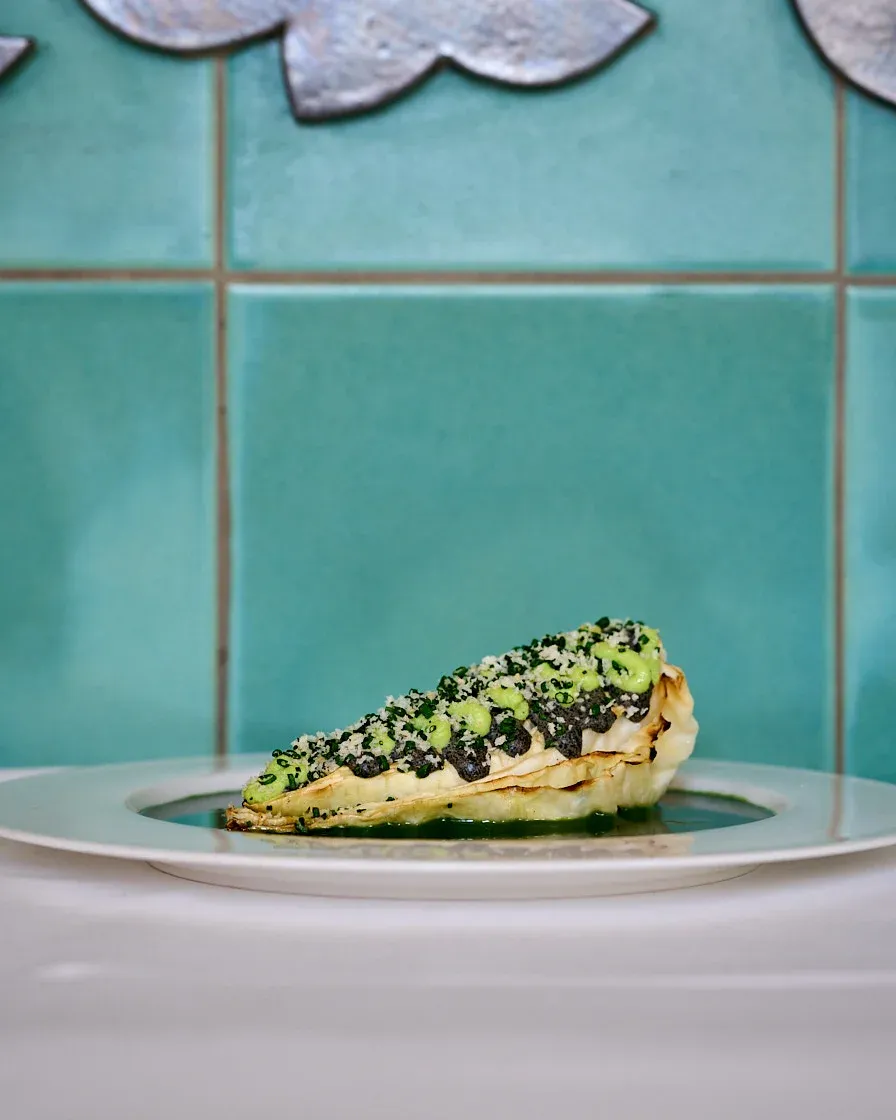
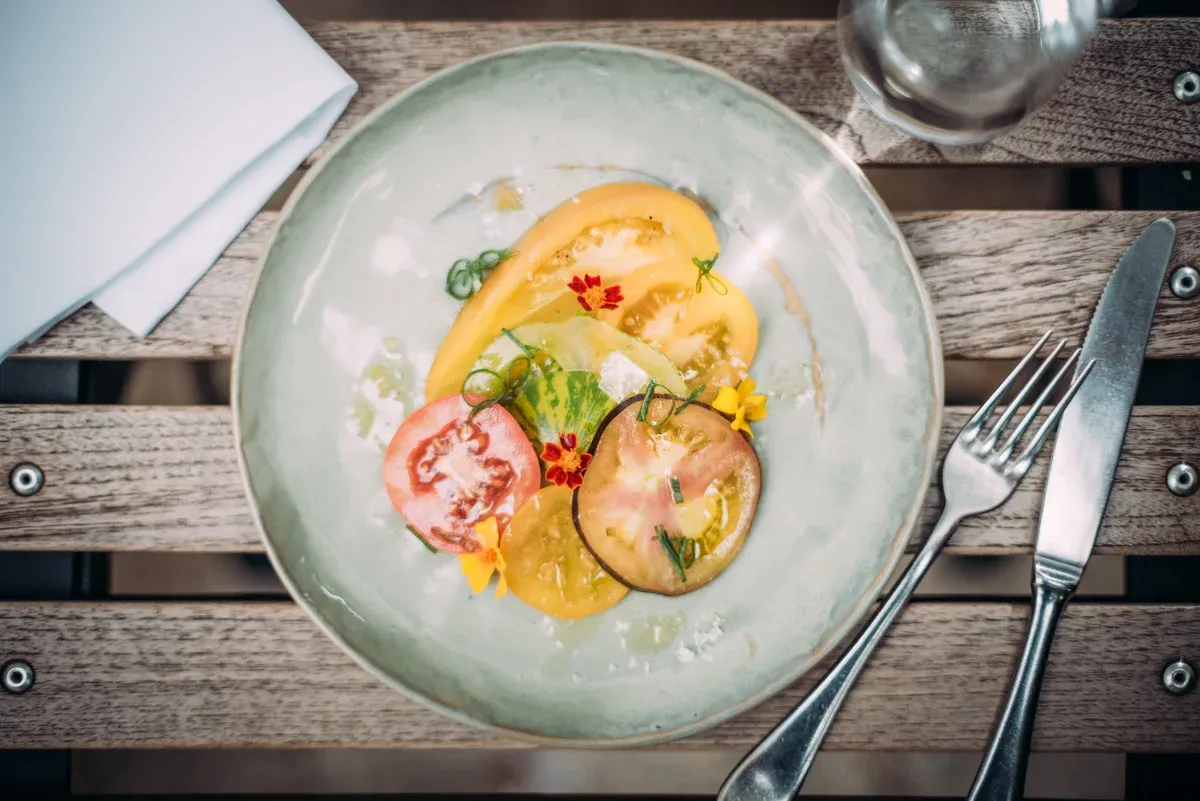
Where else can restaurant guests already enjoy delicacies such as the "Tonda die chioggia" beet, the Filder Spitzkohl (see our portrait), the Fleischtomaten "Berner Rose", "Costaluto Genovese", "Old German" or the aubergines "Zora", "Dourka", "Tarim" or "Tombergine"
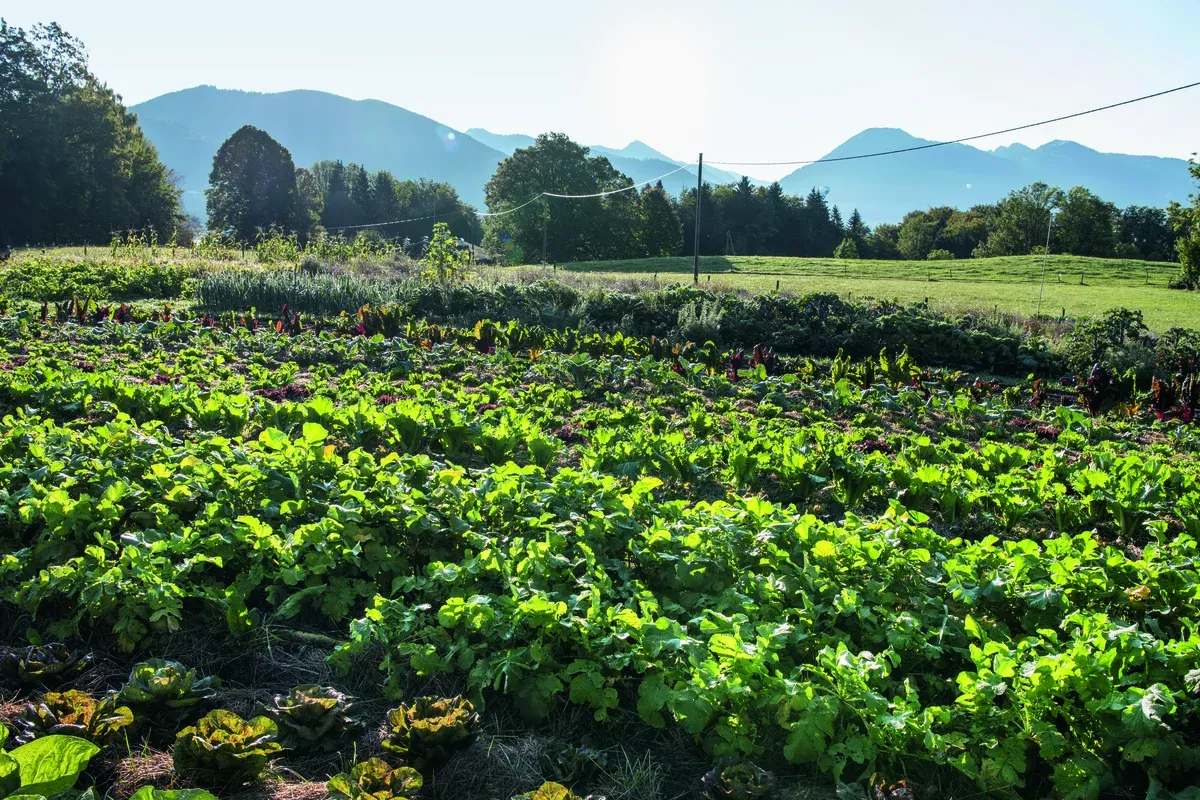
He also implements the principle of complete animal utilization ("nose to tail") in accordance with the philosophy of the Slow Food movement, which includes rare and valuable "Presidi" products and "Arche of Taste" species, namely old, seed-preserved varieties and original breeds, which are brought back into the kitchen. True to the motto "Preserving through eating."
And so it is not surprising that the "Gastronomic Ambassador" Manuel is committed to the Chef Alliance of Slow Food, a network of chefs and cooks who process local and seasonal ingredients, share their culinary expertise, and maintain a strong connection to their region in order to preserve small farms and the local food industry.
Schuastabuam, Beuschel and Co.
The "Arche of Taste" also includes hand-crafted, regionally typical products such as the elongated Kleinbrot "Allgäuer-Oberschwäbische Seele" or the "Nordhessische Ahle Wurscht" - both produced in traditional style.
In Munich, only a few bakers still offer individual products of the Arche Passagier "Münchner Brotzeitsemmeln", whose names such as "Schuastabuam" or„Pfennigmuckerln" are mostly only familiar to locals.
And there is a restaurant, the Broeding, that preserves culinary traditions that are rarely found elsewhere. With which we have arrived at another exciting topic in our conversation, the prerequisites for good meat quality. And who could provide better information than my conversation partner, who can present a qualification as a meat sommelier. Even though he doesn't make a big fuss about it.
As an opener for our exchange, my statement that many people believe that the meat offered in the gastronomy is particularly tasty when young bulls are used, is relevant. The high concentration of protein in the feed, such as maize or soy, which is mainly from South America, contributes to this. However, this can hardly develop in the muscles of a cow before it is slaughtered, which is kept in a stall, into the intramuscular fat veins, which are known as marbling, and which give the meat a special quality. But connoisseurs know that the meat from young cows, or even better, from cows that have grazed, is a delicacy. This is because the animals have better living conditions and are slaughtered at the right age.
Apropos slaughter age: The chef tells about buying a 16-year-old cow from the original Zweinutzungsrasse "Original Braunvieh", which had given birth to two sets of twins and was approaching the end of its natural life. The farmer did not know what to do with the non-breeding cow. Finally, he decided to keep it, feed it with good fodder, and then slaughter it peacefully. Even today, Manuel Reheis's eyes light up when he talks about the enthusiasm that the different preparation methods aroused at a large table.
But what influences the meat quality besides the mentioned factors? The breed, of course, but old breeds are particularly suitable for extensive farming with grazing due to their robustness. The soil and the fodder also play a major role. And above all, the respect for the animals and a stress-free slaughter without long transport times, ideally in walking distance and in the presence of the familiar farmer, are important. Because stress and excitement before and during slaughter not only detract from the meat quality due to hormonal changes, but also make it difficult to prepare the meat. This is particularly important because the meat must be aged for at least three weeks, preferably longer. This is an interesting additional information from Manuel Reheis: The Irish beef has this outstanding quality because the animals benefit from optimal living conditions, but above all, because of the traditional method of aging. The haunches are not fixed to the Achilles tendon, but to the bone of the back. This allows the muscles of the back and the rump to stretch naturally, which makes the meat very tender.
This was followed by a lively exchange about the traditional "Münchner Voressen", which is usually a sweet and sour ragout made from offal such as lung, tripe, heart, calf's breast, and kidneys ("Onglet"). This is a real delicacy, if the chef knows how to do it. As Manuel Reheis does. And after I had also learned about the advantages of the now rarely practiced warm meat processing, which makes the use of enzymes in sausage making unnecessary, the theory finally culminated in the practical experience of a small tasting. Since then, every spoonful of the "Beuschel" from the chef, which is a Bavarian version of lamb's brain, has been a wonderful experience for me. And that is not only true for the delicious Beuschel with capers.
https://www.broeding.de/restaurant.html
Text: Peter Grett
Pictures:
Cover: Peter Grett
Pictures 1 and 6:www.lichtbildstudio.com
Picture 5 vegetable field: Cordula Flegel
All other pictures Annette Sandner